Bright orange logos, the mechanical hum of a spinning disc drive, and arcade-perfect games bursting with color gave the Sega Dreamcast a personality unlike anything else during its era. Released at the end of the 1990s, the console entered a gaming industry preparing for enormous technological change. Online gaming, digital content, and cinematic experiences were beginning to emerge, yet most consoles still relied heavily on traditional ideas carried over from earlier generations.
The Dreamcast arrived with a completely different mindset. Sega pushed ambitious features and experimental concepts into a market that was not fully ready for them yet. Years later, many of the console’s boldest ideas became standard across gaming. Why the Dreamcast was ahead of its time becomes clearer with each passing generation because modern gaming increasingly resembles the future Sega attempted to build decades ago.
Sega Took Risks Few Companies Would Attempt
The Dreamcast represented Sega during its most daring years. The company had already experienced major successes and painful failures before the console launched, yet Sega still approached the Dreamcast with remarkable confidence and creativity. Instead of playing safely, the company embraced ambitious ideas that pushed gaming beyond what most players expected in 1999.
Walking through the Dreamcast library still feels refreshing because so many games carried unusual concepts and unique personalities. Developers experimented constantly, producing titles that looked and played differently from the competition. Games like Jet Set Radio introduced cel-shaded visuals that looked radically different from the realistic direction most companies pursued at the time.
I always admired Sega’s willingness to gamble on originality. Modern gaming often feels carefully calculated around market research and predictable trends, but the Dreamcast era carried a rebellious creative energy. Sega seemed determined to surprise players with bold ideas regardless of commercial risk, and that fearless attitude helped the console stand apart from everything else on store shelves.
Online Gaming Started Before Most Players Expected
One of the clearest examples of why the Dreamcast was ahead of its time came through its online functionality. The console included a built-in modem during an era when online console gaming still felt experimental and unfamiliar to most players. Sega believed internet connectivity represented the future, and the company invested heavily in that vision years before competitors fully committed.
Playing Phantasy Star Online during the early 2000s felt almost surreal. Console players suddenly explored online worlds together, communicated with strangers, and cooperated in ways rarely experienced outside PC gaming communities. The idea of connecting a console directly to the internet still carried a futuristic feeling for many households at the time.
The Dreamcast also supported web browsing and downloadable content long before those features became standard. Looking back now, it feels obvious that Sega accurately predicted the direction gaming would eventually take. Modern consoles rely heavily on online ecosystems, digital updates, and multiplayer services, all concepts the Dreamcast explored years earlier.
Arcade-Perfect Experiences Reached New Heights
Sega’s arcade heritage played a massive role in shaping the Dreamcast identity. The company understood arcade gaming better than nearly anyone else in the industry, and that expertise allowed the console to deliver incredibly accurate home versions of popular arcade titles.
Games like Crazy Taxi and House of the Dead 2 carried an energetic arcade spirit that felt perfectly suited to the hardware. Fast gameplay, colorful visuals, and responsive controls made many Dreamcast titles feel alive in ways competitors sometimes struggled to match. The console embraced fun and excitement over realism, which gave its library tremendous personality.
I still think the Dreamcast captured the arcade atmosphere better than almost any home console before or after it. Loading times remained minimal, visuals looked sharp, and gameplay moved with incredible speed. Sega understood that players wanted excitement immediately, and the Dreamcast consistently delivered that sensation from the moment games started running.
The Visual Memory Unit Predicted Second-Screen Gaming
The Visual Memory Unit, better known as the VMU, remains one of the strangest and most fascinating accessories in gaming history. At first glance, the tiny memory card with a built-in screen appeared gimmicky, yet the concept actually predicted many ideas modern gaming would later revisit.
The VMU displayed game information, mini-games, and additional content directly on the controller. During multiplayer sessions, certain games used the screen to hide private information from opponents viewing the television. That feature added surprising strategic depth and created a sense of interactivity far beyond simple memory storage.
I remember how futuristic the VMU felt despite its simplicity. Carrying mini-games around outside the console almost resembled early portable gaming experiences connected directly to home hardware. Modern second-screen features and companion apps echo ideas Sega experimented with years earlier. The Dreamcast consistently explored concepts that seemed strange at the time but later became far more common.
Shenmue Introduced a New Kind of Open World
Few games demonstrated Sega’s ambition more clearly than Shenmue. Released during a period when open-world gaming remained relatively primitive, Shenmue attempted to create a living environment filled with routines, schedules, weather systems, and detailed interactions.
Walking through the streets of Yokosuka felt astonishingly immersive for its era. Non-playable characters followed daily schedules, stores opened and closed at specific times, and environmental details created a sense of realism rarely seen in gaming at the time. The game emphasized atmosphere and exploration rather than nonstop action, which felt radically different from many late-1990s releases.
Modern open-world games now rely heavily on ideas Shenmue explored decades earlier. Dynamic worlds, immersive storytelling, side activities, and realistic environments became central parts of gaming after the Dreamcast era. Sega’s ambitious project may have overwhelmed audiences initially, but its influence spread quietly throughout the industry.
The Controller Felt Innovative and Comfortable
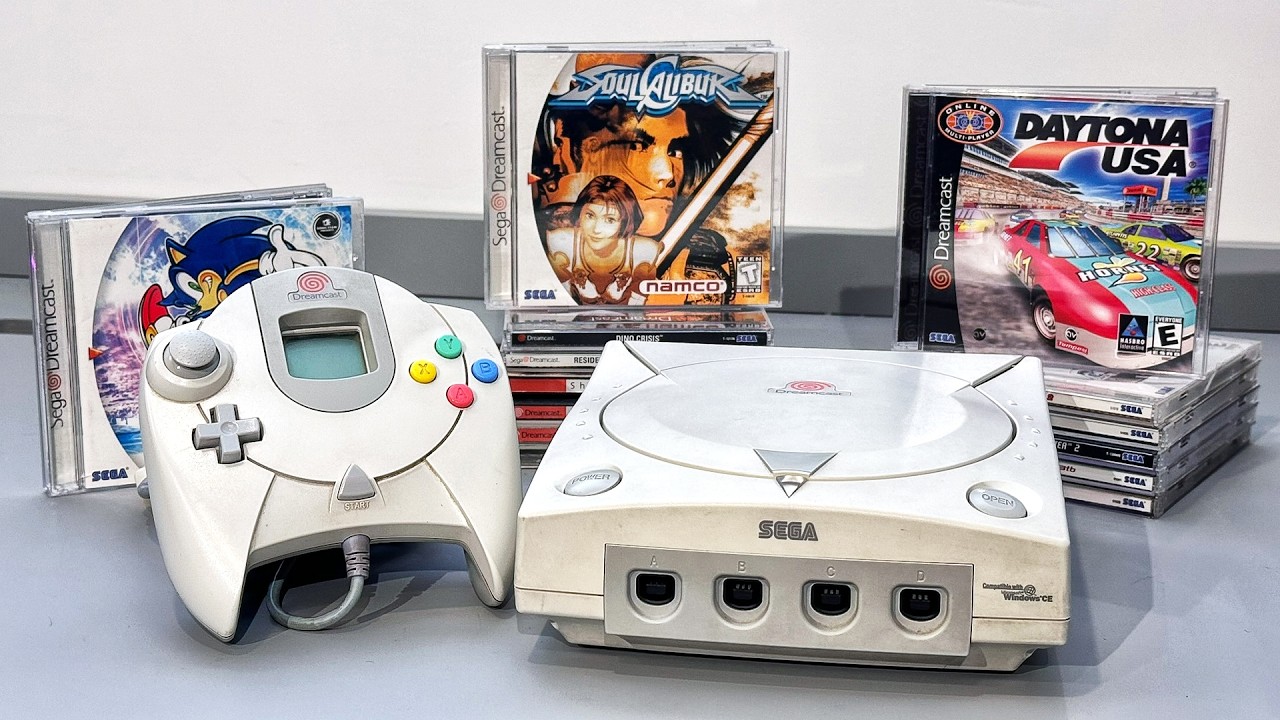
Dreamcast hardware design balanced practicality and experimentation in fascinating ways. The controller featured an unusual shape that initially confused some players, yet it quickly became comfortable during extended gaming sessions. Sega also incorporated expansion slots directly into the controller, allowing accessories like the VMU to integrate naturally into gameplay.
Analog controls felt responsive and precise, which greatly benefited racing games and arcade titles. Multiplayer sessions also became more immersive because accessories connected directly to individual controllers rather than relying solely on the console itself. Sega clearly wanted hardware to feel interactive and adaptable instead of static.
I think the Dreamcast controller reflected Sega’s entire philosophy during that era. The company constantly experimented with new ideas while still maintaining strong gameplay fundamentals. Some design decisions appeared unconventional, but they carried a clear sense of ambition that made the console memorable.
Creative Freedom Defined the Dreamcast Library
Many Dreamcast games carried a strange unpredictability that modern gaming sometimes lacks. Developers experimented freely because the console occupied a unique space within the industry. Sega encouraged unusual projects, and third-party studios often embraced concepts too risky for larger mainstream platforms.
Titles like Seaman demonstrated just how bizarre Dreamcast creativity could become. A game centered around raising a talking fish-human hybrid sounds absurd even now, yet Sega willingly released experiences that challenged conventional gaming expectations. Meanwhile, titles like Rez blended music, visuals, and gameplay into hypnotic interactive art.
That creative freedom gave the Dreamcast library incredible personality. Modern gaming frequently prioritizes safe sequels and predictable formulas because development costs have grown enormous. The Dreamcast era still felt experimental and adventurous, which allowed unusual ideas to flourish in ways rarely seen today.
Sports Games Felt Faster and More Exciting
Sports games on the Dreamcast carried an intensity that immediately stood out during the console’s lifespan. Sega Sports titles especially became famous for their fast pacing, smooth visuals, and arcade-inspired energy. The console handled movement beautifully, making games feel fluid and responsive even compared to competitors released years later.
Playing NFL 2K or NBA 2K during the late 1990s felt revolutionary. Animations appeared smoother, commentary sounded more dynamic, and overall presentation pushed sports gaming toward greater realism and immersion. The 2K series eventually became one of gaming’s biggest franchises, but its roots trace directly back to Dreamcast innovation.
I still believe the Dreamcast changed expectations for sports games permanently. Sega treated presentation as seriously as gameplay, helping sports titles feel closer to live broadcasts than simple arcade experiences. That approach became standard throughout the industry later on.
The Console’s Failure Was Not About Quality
One of the most frustrating parts of Dreamcast history involves how often people confuse commercial failure with poor quality. The console struggled for several reasons unrelated to the hardware itself. Sega’s earlier mistakes damaged consumer trust, while Sony’s upcoming PlayStation 2 generated enormous anticipation that overshadowed nearly everything else in the market.
Timing also played a significant role. DVD technology rapidly gained popularity, and the PlayStation 2 doubled as an affordable DVD player, making it extremely appealing to consumers. The Dreamcast lacked that feature despite excelling in many other areas. Sega found itself trapped between technological transition and fierce competition.
I often think about how differently gaming history might look if the Dreamcast launched under better circumstances. The hardware itself delivered impressive performance, innovative features, and extraordinary games. Unfortunately, market conditions prevented the console from achieving the long-term success it arguably deserved.
Modding and Homebrew Communities Kept It Alive
Long after Sega discontinued the Dreamcast, passionate communities continued supporting the console through modding, emulation, and independent development. That ongoing enthusiasm speaks volumes about how beloved the hardware remained among dedicated fans.
The Dreamcast became surprisingly friendly toward homebrew development compared to many later consoles. Independent creators continued releasing games, ports, and fan projects years after official support ended. Retro enthusiasts also preserved online functionality for certain games, allowing multiplayer experiences to survive far beyond the console’s lifespan.
I always find it remarkable how active the Dreamcast community remains. Few discontinued systems continue attracting this level of dedication decades later. That loyalty exists because players recognized how special the console truly was. Even after commercial failure, the Dreamcast refused to disappear quietly from gaming culture.
Modern Gaming Reflects Sega’s Vision
Looking at modern consoles now makes Sega’s ambitions during the Dreamcast era feel almost prophetic. Online gaming dominates the industry. Digital downloads, downloadable content, internet connectivity, and multimedia features have become standard expectations rather than experimental additions.
Games also increasingly embrace open-world design, social interaction, and stylistic creativity, areas where the Dreamcast often excelled years earlier. The console predicted trends that would later define entire generations of gaming hardware. Sega simply arrived too early with many of its ideas.
Why the Dreamcast was ahead of its time becomes easier to recognize with distance. During its original release, many concepts seemed strange or unnecessary to consumers unfamiliar with evolving technology. Decades later, those same ideas feel completely normal because the industry eventually moved exactly where Sega predicted it would.
The Dreamcast Still Feels Different Today
Returning to the Dreamcast now still feels refreshing because the console carries such a distinct personality. Modern gaming often prioritizes cinematic realism and endless online ecosystems, while the Dreamcast focused heavily on creativity, excitement, and experimentation.
The system also captured a unique transitional moment between arcade gaming and modern online entertainment. Developers still embraced bright colors, unusual mechanics, and fast-paced gameplay while simultaneously exploring internet connectivity and immersive storytelling. That combination created an identity unlike any other console generation.
I think that uniqueness explains why retro enthusiasts continue celebrating the Dreamcast so passionately. The console represents a version of gaming history where companies willingly took strange risks because the future still felt wide open. Sega’s ambition may not have succeeded commercially, but it left behind one of the most fascinating libraries and hardware ecosystems gaming has ever seen.
Final Thoughts
Gaming history often celebrates commercial winners while overlooking consoles that introduced revolutionary ideas before audiences fully appreciated them. The Dreamcast belongs firmly in that overlooked category because so many of its innovations later became standard parts of the gaming industry.
Online gaming, second-screen features, immersive open worlds, downloadable content, and arcade-perfect home experiences all flourished on the Dreamcast years before competitors normalized those concepts. Sega pushed boundaries constantly, even while facing enormous financial and competitive pressure. That willingness to innovate gave the console a legacy far greater than its sales numbers suggest.
Why the Dreamcast was ahead of its time continues to resonate because modern gaming increasingly reflects the future Sega imagined decades ago. The console may have disappeared from store shelves quickly, but its influence never truly faded. Long after its commercial failure, the Dreamcast remains one of gaming’s clearest examples of visionary ambition arriving before the world was ready for it.