Flat-screen televisions dominate modern living rooms, yet retro gamers continue dragging massive CRT televisions into apartments, basements, and gaming rooms with almost stubborn determination. Those bulky screens may look outdated beside sleek OLED displays, but classic games often feel strangely incomplete without them. Pixel art behaves differently, controller response feels sharper, and the entire atmosphere surrounding retro games changes the moment a console powers on through a CRT display.
Modern technology improved image clarity dramatically, but retro gaming was never designed around razor-sharp digital panels. Older consoles expected scanlines, analog blur, and curved glass screens because that was the environment developers worked within during the golden age of gaming. Years spent replaying classic titles across both CRT televisions and modern displays convinced me that the screen itself shapes the experience far more than most players realize. Why CRT TVs still matter for retro gaming becomes obvious after only a few minutes with the right setup.
Retro Games Were Built Around CRT Technology
Developers from the 1980s and 1990s designed games while staring directly at CRT televisions. Artists created sprites with scanlines in mind, programmers balanced animation around analog displays, and visual tricks depended heavily on the behavior of older screens. Modern televisions reveal details those developers never expected players to see.
Pixel art demonstrates this difference immediately. Sharp flat panels expose rough edges and visual gaps that CRT televisions naturally softened together. Characters, backgrounds, and lighting effects suddenly appear more cohesive on CRT displays because the technology blends colors and pixels in subtle ways that older games relied upon heavily.
I noticed this most clearly while replaying 16-bit platformers that looked strangely harsh on a modern television. The sprites appeared jagged, backgrounds looked disconnected, and certain effects lost their intended illusion entirely. Connecting the same console to a CRT transformed the visuals instantly. Colors blended naturally, motion appeared smoother, and the games finally resembled the versions stored in memory from years earlier.
Input Lag Changes Everything
Modern televisions process images through layers of scaling, motion smoothing, and digital enhancement before displaying anything on screen. Even with gaming modes enabled, many displays still introduce noticeable input delay. Retro games suffer badly under those conditions because older titles often demanded precise reactions and exact timing.
CRT televisions display images almost instantly because they were designed for analog signals from the beginning. Jumping across tiny platforms, dodging projectiles, or landing difficult combos feels far more responsive compared to many modern screens. The difference may sound small on paper, but older games expose input lag brutally fast.
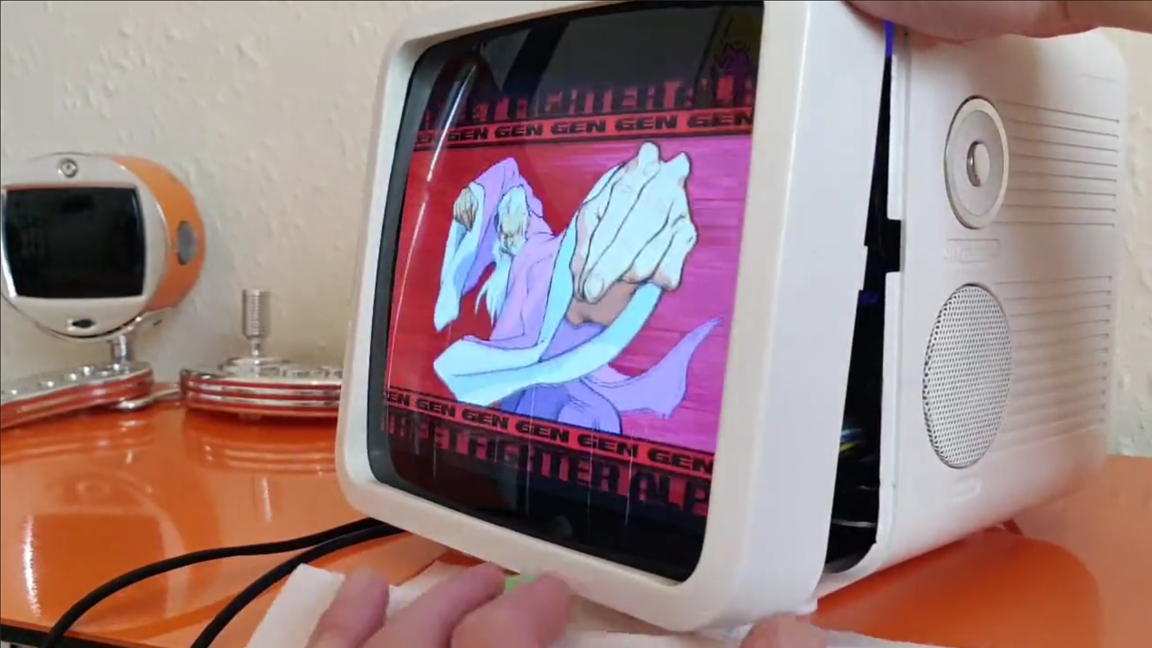
Fighting games revealed this reality to me more than any other genre. Classic arcade fighters suddenly became frustrating on flat screens because defensive reactions felt slightly delayed. Returning to a CRT restored that immediate connection between controller input and on-screen action. Movements felt natural again, and difficult combos landed with consistency that modern displays struggled to replicate.
Scanlines Are More Important Than Many Players Realize
Retro gaming discussions often mention scanlines casually, but they played a massive role in how classic games appeared visually. CRT televisions generated horizontal scanlines naturally as images refreshed across the screen. Developers used those visual characteristics intentionally while designing artwork and special effects.
Certain graphics depended entirely on scanline behavior to create illusions of transparency, shadows, or blended colors. Water effects, fog, lighting, and gradients frequently relied on CRT technology to appear correctly. Modern displays expose the raw pixel structure instead, which can make old visual tricks appear crude or unfinished.
I spent years dismissing scanlines as simple nostalgia until comparing identical games side by side on CRT and LCD displays. The difference shocked me. Sprite outlines looked cleaner, colors blended more naturally, and backgrounds gained texture that vanished completely on modern screens. Those scanlines were not flaws in the technology. They were part of the artistic canvas developers used while building games.
Light Gun Games Barely Function Without CRTs
One of the biggest reasons why CRT TVs still matter for retro gaming involves genres that modern televisions simply cannot support properly. Classic light gun games depend on CRT scanning technology to register shots accurately, which means flat panels usually fail completely with original hardware.
Games built around accessories like the Nintendo Zapper or Sega Menacer lose their core functionality on modern televisions. Duck Hunt, Time Crisis, House of the Dead, and countless arcade shooters become impossible to experience authentically without CRT displays. Emulation and modern workarounds exist, but they rarely capture the same physical sensation as original hardware.
I rediscovered this during a retro gathering where several players attempted old light gun games on a modern screen. The accessories barely responded correctly, and the experience collapsed almost immediately. Switching to a CRT changed everything within seconds. Suddenly the games worked exactly as intended, reminding everyone why those older displays remain irreplaceable for certain genres.
Motion Clarity Still Feels Superior
Modern televisions boast stunning resolutions and incredible brightness, yet CRT televisions still handle motion in ways that impress many retro enthusiasts. Fast scrolling backgrounds, rapid character movement, and arcade shooters often appear remarkably smooth on CRT displays without motion blur or digital artifacts.
Retro games relied heavily on speed and movement. Side-scrolling platformers, racing games, and shoot-em-ups frequently pushed hardware to its limits with rapid animation and scrolling environments. CRT technology displayed that movement naturally because it refreshed images differently than modern flat panels.
I noticed this while replaying classic Sonic the Hedgehog titles. On modern televisions, high-speed stages occasionally looked smeared during fast movement despite advanced display technology. CRT televisions maintained cleaner motion that made gameplay easier to follow. That sensation of speed felt sharper and more exciting in ways difficult to explain until experienced directly.
Curved Screens Shape the Visual Experience
Curved glass screens became so common during the CRT era that many players never questioned how much they influenced game presentation. Modern displays prioritize perfectly flat images, but retro games often appear surprisingly natural on curved CRT screens because that was their original visual environment.
The subtle curvature changes how sprites and backgrounds occupy space visually. Certain arcade games especially benefit from this effect because the curved image enhances depth and movement slightly. Combined with scanlines and analog softness, the result creates a visual texture that flat panels struggle to reproduce authentically.
Large CRT televisions possess an atmosphere modern displays rarely capture. The soft glow of phosphors, the gentle curve of the screen, and the faint electrical hum all contribute to an experience that feels deeply connected to gaming history. Playing retro games on CRT hardware often feels less like emulation and more like stepping directly into another era.
Audio Feels Different Through Older Hardware
Retro gaming conversations focus heavily on visuals, but CRT televisions also shaped how classic games sounded. Older sets produced warm, slightly imperfect audio that complemented retro soundtracks surprisingly well. Chiptune music, arcade explosions, and synthesized effects carried a distinct character through CRT speakers.
Modern sound systems deliver cleaner audio technically, yet retro games sometimes lose part of their personality through overly polished setups. The rougher texture of CRT audio often matched the visual style of classic games naturally. Those imperfections became part of the identity surrounding retro gaming itself.
Late-night gaming sessions on old CRT televisions still carry a unique atmosphere that modern setups struggle to recreate. The combination of glowing scanlines, warm speakers, and analog visuals creates an environment that feels intimate and strangely alive. Nostalgia certainly influences part of that sensation, but the hardware genuinely alters the emotional tone of the experience.
Retro Consoles Behave Better on CRT Displays
Older consoles frequently output signals that modern televisions dislike. Resolution switching, unusual refresh rates, and analog quirks can confuse flat panels badly. Certain games produce flickering screens, distorted images, or temporary blackouts during transitions because modern displays were never designed for those older signal standards.
CRT televisions handle those signals effortlessly because they were built during the same era as the consoles themselves. Switching between menus and gameplay happens instantly without interruptions or scaling problems. Compatibility becomes far simpler, especially for enthusiasts using multiple retro systems regularly.
I encountered this issue repeatedly with older PlayStation and Sega Saturn games that changed resolutions between gameplay and menus. Modern televisions occasionally lost signal entirely during those transitions, creating frustrating interruptions. CRT displays handled the same games flawlessly without hesitation. That reliability matters enormously for players who value convenience alongside authenticity.
The Hunt for CRT TVs Became Part of Retro Culture
Finding quality CRT televisions has evolved into a strange hobby within retro gaming itself. Enthusiasts search garage sales, thrift stores, online marketplaces, and abandoned basements looking for well-preserved sets from specific manufacturers and eras. Certain models now command serious respect within collector communities.
Sony Trinitron televisions became especially sought after because of their exceptional image quality and durability. Professional video monitors once used in broadcasting studios also gained legendary status among enthusiasts willing to spend heavily for near-perfect retro displays. The search itself became intertwined with retro gaming culture in fascinating ways.
I never expected television hunting to become part of gaming, yet it happened naturally over time. Conversations with collectors often revolve around obscure CRT models, hidden marketplace finds, and restoration projects. Carrying a massive television down narrow apartment stairs may sound absurd to outsiders, but retro enthusiasts understand the excitement immediately.
Modern Alternatives Still Struggle to Replicate CRTs Perfectly
Technology companies and retro gaming enthusiasts continue trying to replicate CRT behavior through shaders, filters, and advanced display technology. Some solutions look impressive, especially high-end OLED setups paired with quality scanline filters and low-latency scalers. Even so, subtle differences remain noticeable to experienced players.
CRT televisions possess unpredictable analog characteristics that prove difficult to reproduce digitally. Slight phosphor glow, natural motion handling, analog blending, and zero-latency response combine into an experience modern screens still imitate rather than duplicate entirely. Emulation improves constantly, but the original hardware environment retains a unique identity.
I enjoy modern retro setups enormously and appreciate the convenience they provide. HDMI adapters, upscalers, and OLED televisions make retro gaming accessible in ways impossible years ago. Despite those advances, sitting in front of a genuine CRT still feels fundamentally different. The games appear more natural because they exist within the environment they were originally built to inhabit.
Space and Practicality Remain Real Challenges
Defending CRT televisions honestly means acknowledging their flaws as well. They are massive, heavy, power-hungry, and increasingly difficult to maintain as components age. Moving even medium-sized CRT sets can become exhausting, especially in smaller apartments or upstairs living spaces.
Storage creates another major problem for collectors with multiple consoles and displays. Modern flat panels mount neatly on walls, while CRT televisions demand dedicated furniture capable of supporting serious weight. Heat generation and aging capacitors also introduce maintenance concerns that modern displays rarely require.
Despite those inconveniences, retro enthusiasts continue preserving CRT televisions because the experience feels worth the effort. Practicality alone does not explain why people rescue decades-old televisions from recycling centers and repair failing components late into the night. Passion drives that dedication because CRT gaming still offers something modern displays cannot fully replace.
Final Thoughts
Retro gaming survives because older games continue delivering creativity, challenge, and personality that transcends generations. Hardware plays a massive role in preserving those experiences authentically, and CRT televisions remain one of the most important pieces of that puzzle. They do far more than display images. They shape how classic games look, feel, sound, and respond.
Why CRT TVs still matter for retro gaming becomes easier to understand after spending meaningful time with original hardware on the displays those games were designed around. Scanlines soften pixel art beautifully, input response feels immediate, motion remains smooth, and entire genres function properly only through CRT technology. Modern displays offer convenience and incredible visual clarity, but they cannot fully recreate the analog character surrounding classic gaming.
The glow of a CRT television still carries a strange kind of magic. Old consoles feel alive again beneath curved glass screens humming softly in dimly lit rooms. Retro gaming has always been about more than software alone, and CRT televisions continue proving that the hardware surrounding those games matters just as much as the cartridges and discs themselves.