Long road trips, dimly lit back seats, school lunch breaks, and quiet nights under blankets with tiny glowing screens turned handheld gaming into something deeply personal for an entire generation of players. Home consoles delivered spectacle inside living rooms, but handheld systems created a different kind of connection. These machines traveled everywhere, becoming constant companions during daily life rather than devices tied to a television set.
Portable gaming evolved dramatically across several decades, transforming from simple monochrome experiences into powerful systems capable of delivering console-quality adventures. The greatest handheld consoles in gaming history succeeded because they balanced technology, battery life, game libraries, and personality in ways that felt unforgettable. Some dominated globally, while others became cult favorites among collectors and retro enthusiasts, yet all of them helped redefine how and where people experienced video games.
The Game Boy Changed Portable Gaming Forever
The Game Boy arrived during a period when portable gaming still felt experimental and somewhat limited. Nintendo understood immediately that portability mattered more than technical power alone. Instead of chasing flashy visuals, the company focused on battery life, durability, affordability, and addictive gameplay.
Games like Tetris transformed the system into a worldwide phenomenon almost instantly. The puzzle gameplay felt timeless, and players of all ages became obsessed with fitting blocks together during spare moments throughout the day. Meanwhile, franchises like Pokémon Red and Blue elevated the handheld into a cultural icon that completely reshaped gaming history.
I still think the original Game Boy succeeded because it understood human behavior better than competing hardware. Players wanted something reliable they could carry everywhere without worrying constantly about batteries or fragile components. Nintendo delivered exactly that, and the system’s impact remains impossible to overstate.
The Game Boy Advance Perfected Nintendo’s Formula
Few handheld systems balanced power, portability, and game quality as effectively as the Game Boy Advance. Nintendo refined nearly everything players loved about earlier Game Boy hardware while introducing sharper visuals, improved sound, and far more ambitious software experiences.
The library became extraordinary almost immediately. Games like Metroid Fusion and The Legend of Zelda: The Minish Cap delivered experiences that felt remarkably close to full console adventures despite running on portable hardware. Sprite artwork also reached stunning levels of quality during the Game Boy Advance era.
I carried a Game Boy Advance almost everywhere because the system offered an incredible balance between accessibility and depth. Quick sessions worked perfectly during short breaks, yet many games also supported lengthy adventures filled with rich storytelling and exploration. The handheld felt mature without losing the simplicity that made portable gaming appealing originally.
The Nintendo DS Revolutionized Touchscreen Gaming
The Nintendo DS looked strange during its reveal period. Two screens, touchscreen controls, and microphone functionality felt radically different from traditional handheld gaming expectations. Many players questioned Nintendo’s unusual direction initially, but the company once again proved remarkably skilled at predicting gaming trends.
The touchscreen opened entirely new gameplay possibilities. Titles like Brain Age attracted audiences who rarely played traditional games before, while Mario Kart DS demonstrated how online portable multiplayer could become surprisingly addictive.
I loved how experimental the DS era felt. Developers constantly explored strange concepts that would have seemed impossible on earlier handhelds. Some ideas failed completely, yet others transformed gaming in fascinating ways. The DS became one of Nintendo’s boldest success stories because it encouraged creativity rather than relying solely on technical power.
The PlayStation Portable Brought Console Ambition to Handhelds
Sony entered the portable gaming market aggressively with the PlayStation Portable, often called the PSP. The hardware looked sleek, modern, and technologically impressive compared to existing handheld competitors. Sony clearly wanted players to experience something much closer to console gaming while traveling.
Games like God of War: Chains of Olympus and Metal Gear Solid: Peace Walker showcased visuals and storytelling that seemed astonishing for portable hardware during the mid-2000s. Multimedia functionality also helped the PSP stand apart because players could watch movies, listen to music, and browse digital content directly from the system.
The PSP felt incredibly futuristic during its prime years. Holding a device capable of delivering near-console-quality graphics on the go genuinely impressed people at the time. Sony succeeded by giving portable gaming a more cinematic identity that appealed strongly to older audiences.
The Nintendo 3DS Brought Depth Back to Handheld Gaming
The Nintendo 3DS launched during a complicated period for handheld gaming because smartphones were rapidly changing casual entertainment habits worldwide. Nintendo responded by emphasizing dedicated gaming experiences impossible to replicate fully on phones at the time.
The glasses-free 3D effect generated enormous attention initially, but the console’s real strength came from its software library. Games like Animal Crossing: New Leaf and Fire Emblem Awakening delivered deeply engaging experiences that encouraged long-term investment from players.
I always appreciated how personal the 3DS felt. StreetPass features, custom themes, and portable social interaction created a sense of community unlike anything else in handheld gaming. Nintendo once again understood that personality and charm mattered just as much as raw technical specifications.
The Neo Geo Pocket Color Became a Cult Favorite
The Neo Geo Pocket Color never achieved massive mainstream success, yet retro enthusiasts continue praising the system passionately decades later. SNK designed the handheld with arcade-quality gameplay and strong fighting game support in mind, giving the console a distinct identity.
Titles like SNK vs. Capcom: Match of the Millennium demonstrated how polished portable fighting games could become. The handheld also featured an excellent click-style joystick that many players still consider one of the best portable control designs ever created.
I admire the Neo Geo Pocket Color because it carried so much personality despite its relatively short lifespan. The system felt confident and focused rather than trying to imitate competitors directly. That uniqueness helped it remain memorable long after disappearing from store shelves.
The Sega Game Gear Delivered Color Before Nintendo
The Game Gear represented Sega’s attempt to challenge Nintendo’s portable dominance through superior technology and vibrant color visuals. Compared to the monochrome Game Boy screen, the Game Gear looked dramatically more advanced during the early 1990s.
Games appeared bright and visually exciting, especially titles connected to Sega’s arcade heritage. The handheld even supported television tuner accessories in certain regions, reinforcing Sega’s reputation for experimentation and unusual hardware ideas.
Battery life became the system’s greatest weakness, however. The Game Gear consumed batteries at an almost comical rate compared to Nintendo’s hardware. Still, I remember how impressive the screen looked during that era. Seeing full-color portable gaming felt almost magical despite the constant need for replacement batteries.
The WonderSwan Quietly Built an Excellent Library
Outside Japan, many gamers never encountered the WonderSwan at all. Designed by Gunpei Yokoi after leaving Nintendo, the handheld offered excellent battery efficiency and clever design decisions that earned strong support within Japan.
Role-playing games flourished on the platform, while the handheld’s vertical and horizontal play options gave developers creative flexibility. The WonderSwan also benefited from surprisingly strong support from major Japanese publishers during its lifespan.
I think the WonderSwan deserves far more international recognition than it receives. The hardware demonstrated thoughtful engineering and elegant simplicity rather than chasing unnecessary gimmicks. Retro collectors increasingly appreciate the handheld because it represents a fascinating alternate path within portable gaming history.
The PlayStation Vita Arrived Too Early
The PlayStation Vita remains one of gaming’s most bittersweet handheld stories. Technically, the hardware looked extraordinary during its launch period. Beautiful OLED screens, dual analog sticks, touchscreen controls, and powerful graphics gave the Vita capabilities far beyond most portable competitors.
Games like Persona 4 Golden and Uncharted: Golden Abyss highlighted the system’s impressive potential immediately. Yet rising smartphone dominance and weak long-term support from Sony ultimately limited the Vita’s commercial success.
I still believe the Vita deserved better. The handheld felt premium in every possible way, and many indie developers later embraced the platform enthusiastically because of its excellent controls and vibrant display. The system became beloved among dedicated fans even as mainstream attention faded.
The Atari Lynx Pushed Technology Aggressively
The Atari Lynx entered the market with impressive technical capabilities for its era. Full-color graphics, multiplayer connectivity, and ambidextrous controls made the Lynx feel unusually advanced compared to competing handheld systems during the late 1980s.
The hardware’s size and battery consumption created serious problems, though. Carrying the Lynx felt far less convenient than using Nintendo’s smaller Game Boy. Despite those drawbacks, the system still produced memorable games and gained a loyal following among players seeking more technically ambitious portable experiences.
I find the Lynx fascinating because it represents a recurring theme throughout handheld history. Technical superiority alone rarely guaranteed commercial success. Portability, affordability, and convenience often mattered far more to players than raw hardware power.
Handheld Gaming Created Different Emotional Connections
Portable gaming always felt more personal than traditional console gaming to me. Home consoles belonged to living rooms and shared entertainment spaces, while handheld systems became deeply tied to individual routines and memories. People carried these devices during travel, school breaks, vacations, and quiet private moments.
That intimacy helped many handheld games leave lasting emotional impressions despite technological limitations. Pixelated adventures played through tiny speakers often felt strangely comforting because they accompanied players through everyday life. Handheld gaming blended naturally into personal routines in ways home consoles rarely could.
The greatest handheld consoles in gaming history succeeded partly because they respected portability itself rather than treating it as a limitation. Developers designed experiences specifically for shorter sessions, travel conditions, and personal immersion. That design philosophy helped portable gaming establish its own unique identity separate from traditional console experiences.
Modern Portable Gaming Still Reflects These Classics
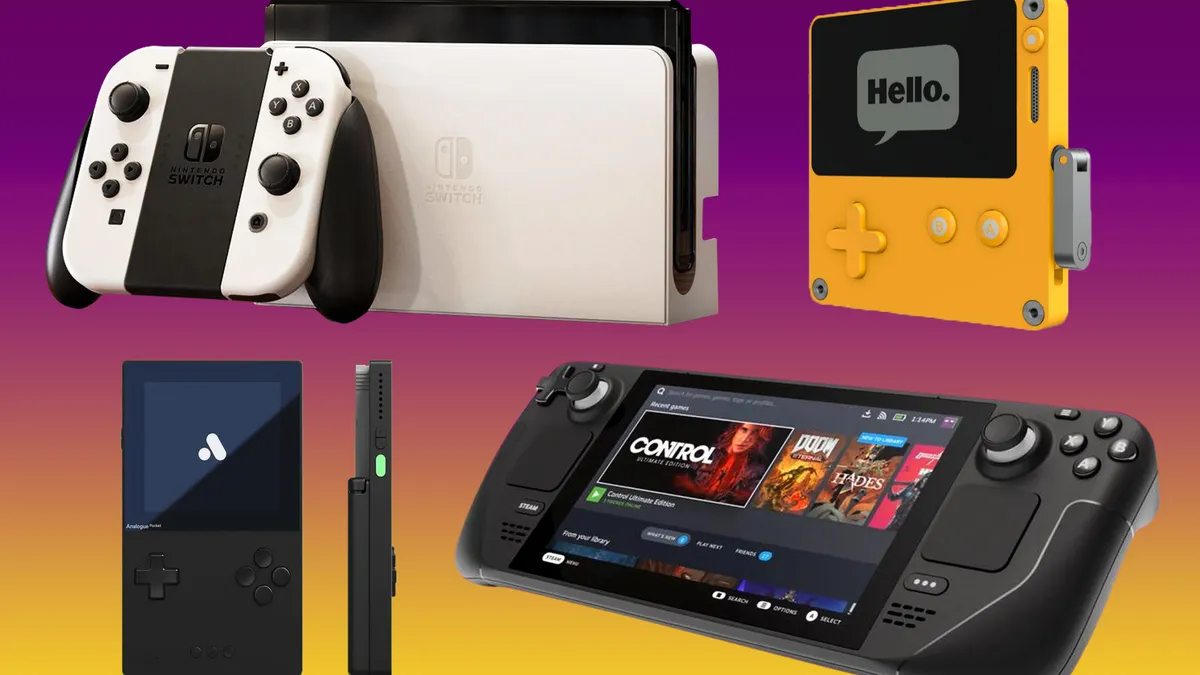
Modern portable gaming devices owe enormous debts to the systems that shaped earlier generations. Features now considered standard, including sleep modes, touchscreen interaction, wireless multiplayer, and hybrid gaming concepts, evolved gradually through decades of handheld experimentation.
The Nintendo Switch especially reflects ideas explored across earlier portable systems. The concept of transitioning seamlessly between home and portable gaming feels like a culmination of trends handheld manufacturers pursued for years.
I enjoy seeing how modern gaming continues revisiting ideas pioneered by classic handhelds. Retro systems may appear technologically primitive today, yet many introduced concepts far ahead of their time. Their influence continues shaping portable gaming experiences even decades later.
Final Thoughts
Portable gaming evolved from simple monochrome distractions into deeply immersive experiences capable of rivaling home consoles in creativity and emotional impact. The greatest handheld consoles in gaming history succeeded because they balanced technology, personality, and accessibility while adapting to changing player expectations across different eras.
Systems like the Game Boy, PSP, Nintendo DS, Game Boy Advance, and PlayStation Vita transformed gaming culture by proving interactive entertainment could travel anywhere. Each handheld carried unique strengths and weaknesses, yet all contributed important ideas that shaped portable gaming’s evolution.
Long after many of these systems disappeared from store shelves, their influence remains unmistakable. Retro enthusiasts continue revisiting classic handhelds because those machines captured something special about gaming’s history. They turned ordinary moments into adventures, and that emotional connection still matters decades later.