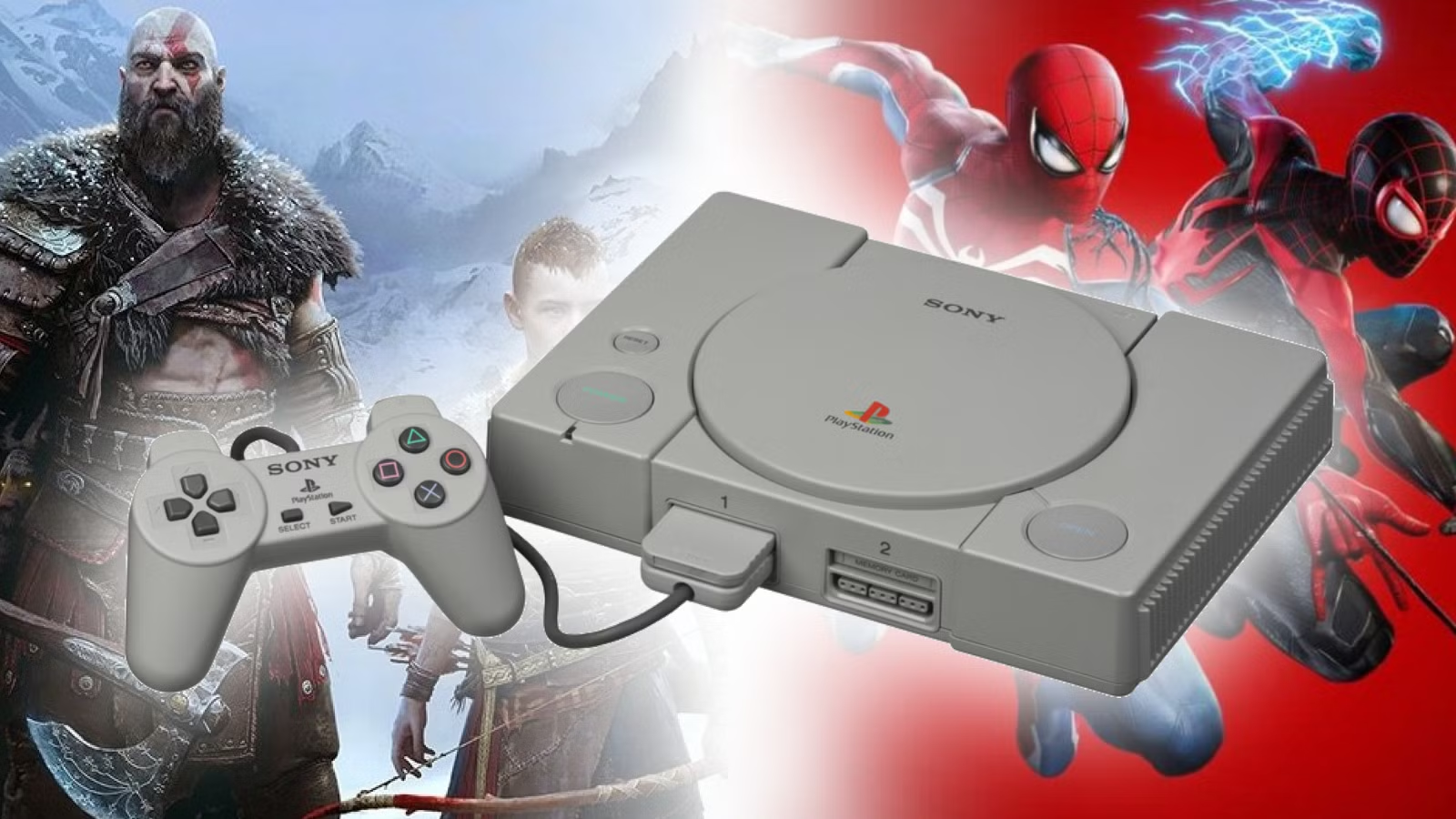
Gray plastic consoles, scratched game discs stacked beside television stands, and the unmistakable startup sound of the original PlayStation became defining parts of gaming culture during the late 1990s and early 2000s. Sony entered the gaming industry as an outsider, yet within a few years the company transformed home entertainment in ways few people expected. The rise of PlayStation changed not only how games looked and sounded, but also how players viewed gaming itself.
Before Sony arrived, Nintendo and Sega largely controlled the console market. Gaming still carried a strong association with children’s entertainment, and many companies approached the industry cautiously. The evolution of PlayStation during the retro era completely disrupted that landscape by pushing gaming toward cinematic storytelling, mature audiences, 3D innovation, and mainstream popularity. Looking back now, the PlayStation revolution feels less like a normal console launch and more like the beginning of an entirely different era of gaming.
Sony Entered the Industry With Something to Prove
Sony’s arrival in gaming carried an unusual level of tension because the company originally planned to work alongside Nintendo rather than compete against it. That partnership eventually collapsed, leading Sony to develop its own console instead. Many industry veterans doubted whether an electronics company without major gaming experience could seriously challenge established competitors.
The original PlayStation immediately felt different from other consoles of the time. Its sleek gray design looked more like audio equipment than a toy, and Sony leaned heavily into marketing that targeted teenagers and young adults. Commercials carried an edgy tone that separated the brand from the family-friendly image associated with Nintendo.
I still remember how surprising the PlayStation felt during its early years. Sony approached gaming with enormous confidence despite entering a fiercely competitive market. The company understood that gaming audiences were growing older and wanted experiences that felt more cinematic, ambitious, and emotionally engaging. That shift in attitude became one of the biggest reasons the PlayStation brand exploded so quickly.
Compact Discs Changed Game Development Forever
Cartridge-based gaming dominated much of the early console industry, but Sony fully embraced compact discs as the future of gaming storage. That decision dramatically expanded what developers could include inside their games. Suddenly, studios had enough space for orchestral soundtracks, voice acting, full-motion video, and larger game worlds.
Games like Final Fantasy VII demonstrated just how transformative CD technology could become. Massive cinematic cutscenes and sprawling environments felt impossible on many cartridge-based competitors at the time. Meanwhile, titles such as Metal Gear Solid used voice acting and cinematic presentation to deliver storytelling that felt groundbreaking.
Compact discs also reduced manufacturing costs compared to cartridges, making it easier for developers to produce games. That affordability encouraged more experimentation because studios faced lower financial risks. The evolution of PlayStation during the retro era depended heavily on this transition toward disc-based gaming because it opened creative possibilities that completely reshaped the industry.
3D Gaming Reached a New Level
The gaming industry experimented with 3D visuals before the PlayStation arrived, but Sony’s console helped push the technology into the mainstream. Developers suddenly explored fully three-dimensional worlds with a level of ambition rarely seen on earlier hardware.
Playing Crash Bandicoot or Spyro the Dragon felt exciting because those worlds carried depth and movement unlike traditional side-scrolling platformers. Racing games also evolved dramatically during this era, with titles like Gran Turismo introducing realistic driving mechanics and detailed car models that fascinated players.
Not every early 3D game aged gracefully, yet the experimentation itself remains fascinating. Developers learned how to handle camera movement, environmental design, and character controls in real time. The PlayStation became a laboratory for ideas that would eventually define modern gaming. Watching that evolution happen during the retro era felt like witnessing an entirely new artistic language being invented.
PlayStation Expanded Gaming Audiences
One of Sony’s smartest decisions involved targeting older audiences who previously viewed gaming as childish entertainment. Marketing campaigns emphasized attitude, style, and maturity in ways that separated PlayStation from competitors. That approach attracted teenagers and adults who suddenly saw gaming as socially acceptable rather than purely juvenile.
The console’s library reflected that broader audience. Horror games like Resident Evil 2 introduced cinematic tension and mature themes that resonated strongly with older players. Action titles, racing simulators, and story-driven adventures also expanded gaming’s appeal beyond children and families.
I noticed gaming conversations changing during the PlayStation era. More adults openly discussed games, and gaming culture started moving closer to mainstream entertainment alongside music and film. Sony recognized that gaming audiences were evolving, and the company positioned PlayStation perfectly to capture that cultural shift.
Third-Party Developers Flourished on PlayStation
Sony’s relationship with third-party developers became one of the biggest reasons for the PlayStation’s enormous success. Many studios appreciated the affordability and flexibility of CD technology, while Sony offered strong support during a period when some competitors maintained stricter publishing practices.
The result was a massive and incredibly diverse library of games. Role-playing games, fighting titles, survival horror experiences, sports games, and experimental projects all thrived on the platform. Developers from Japan, Europe, and North America embraced the console enthusiastically, helping create one of the most varied gaming libraries ever assembled.
I always admired how unpredictable the PlayStation catalog became. One moment players explored emotional RPGs, while the next they experienced bizarre rhythm games or strange experimental adventures. That diversity gave the platform enormous personality and ensured nearly every type of gamer could find something memorable to enjoy.
The DualShock Controller Changed Gameplay
The original PlayStation controller already felt comfortable and intuitive, but Sony’s introduction of the DualShock controller transformed console gaming even further. Analog sticks and vibration feedback added entirely new dimensions to gameplay that quickly became industry standards.
Racing games gained smoother steering controls, platformers allowed more precise movement, and action games felt more immersive because of rumble feedback during explosions and combat. The DualShock design balanced innovation with familiarity, making the transition feel natural rather than overwhelming.
I still think Sony handled controller evolution brilliantly during this era. Instead of reinventing everything completely, the company gradually improved the design while maintaining player comfort. Modern controllers across multiple platforms still carry clear influences from the DualShock layout introduced during the retro PlayStation years.
Role-Playing Games Found a New Home
Japanese role-playing games experienced enormous growth during the PlayStation era. Earlier generations featured strong RPGs primarily on Nintendo hardware, but Sony quickly became the dominant platform for the genre thanks to CD technology and strong third-party relationships.
Games like Chrono Cross and Suikoden II demonstrated extraordinary storytelling ambition. Developers explored emotional themes, complex characters, and cinematic presentation in ways that deeply resonated with players. The larger storage capacity of discs allowed worlds and narratives to expand dramatically compared to earlier cartridge limitations.
Those RPG experiences helped gaming mature artistically during the retro era. Players spent dozens of hours immersed in emotionally rich adventures that felt comparable to epic novels or films. The PlayStation became the definitive destination for role-playing fans because the console gave developers freedom to dream bigger than before.
Survival Horror Became a Major Genre
The PlayStation era also helped establish survival horror as one of gaming’s defining genres. Developers used cinematic camera angles, atmospheric music, and limited resources to create tension unlike anything many players had previously experienced.
Games like Silent Hill transformed psychological horror into an interactive experience filled with dread and mystery. Meanwhile, Resident Evil introduced players to terrifying environments, puzzle-solving mechanics, and unforgettable monster encounters.
I remember how intense those games felt late at night with the lights off. The PlayStation’s sound design and visual atmosphere created genuine fear in ways earlier consoles rarely achieved. Survival horror became a major part of the PlayStation identity because Sony’s hardware allowed developers to build cinematic worlds filled with tension and emotional impact.
The PlayStation 2 Expanded the Revolution
The release of the PlayStation 2 pushed Sony’s dominance even further during the retro era. Anticipation surrounding the console reached extraordinary levels because the original PlayStation had already transformed gaming culture worldwide.
The PlayStation 2 offered improved graphics, DVD playback functionality, and one of the largest game libraries in history. Titles like Grand Theft Auto: San Andreas and Shadow of the Colossus demonstrated how dramatically gaming evolved within only a few years.
The console also became a multimedia centerpiece in many homes because DVD players remained expensive during the early 2000s. Sony smartly positioned the PlayStation 2 as both a gaming machine and entertainment device, helping the system dominate global sales. The evolution of PlayStation during the retro era accelerated rapidly with the arrival of the PS2 because Sony understood how entertainment technology was converging.
Online Gaming Slowly Began Expanding
Online gaming remained relatively limited during the original PlayStation era, yet Sony gradually moved toward internet connectivity as technology improved. By the PlayStation 2 generation, online functionality started becoming more important for multiplayer experiences and digital communication.
Games like SOCOM U.S. Navy SEALs introduced console players to online teamwork and voice communication in ways that foreshadowed modern multiplayer gaming. Broadband adapters and internet support slowly expanded PlayStation beyond purely offline entertainment.
I find it fascinating how quickly gaming evolved during this period. The industry moved from local multiplayer sessions and memory cards toward online communities and digital interaction within only a few hardware generations. Sony adapted aggressively to those changes, helping position PlayStation for long-term dominance.
PlayStation Helped Gaming Become Mainstream
Gaming existed long before Sony entered the market, but the PlayStation era pushed the medium into mainstream culture at an entirely different scale. Music, fashion, advertising, and entertainment industries increasingly embraced gaming as part of popular culture rather than treating it as a niche hobby.
Celebrities referenced PlayStation in interviews and music videos. Gaming magazines exploded in popularity, and midnight console launches became massive cultural events. The PlayStation brand carried an undeniable cool factor during the late 1990s and early 2000s that helped gaming feel modern and socially accepted.
I think that cultural transformation remains one of Sony’s biggest achievements. The company did not simply sell consoles. It reshaped public perception of gaming itself. By targeting older audiences and embracing cinematic presentation, Sony helped establish gaming as a dominant entertainment medium worldwide.
Retro PlayStation Games Still Hold Up Today
Many games from the retro PlayStation era continue attracting players decades later because their creativity and ambition remain impressive even by modern standards. While some graphics appear dated, the storytelling, gameplay mechanics, and atmosphere often feel timeless.
Modern remakes and remasters constantly revisit PlayStation classics because demand never disappeared. Players still care deeply about the worlds and characters introduced during this era. Franchises born on the original PlayStation and PlayStation 2 continue influencing gaming today because their foundations were so strong.
Revisiting retro PlayStation games always reminds me how fearless developers seemed during that period. Studios experimented constantly with new genres, cinematic techniques, and gameplay systems because the industry still felt wide open. That creative energy helped shape some of the most memorable gaming experiences ever made.
Final Thoughts
The retro PlayStation era transformed gaming more dramatically than many people realized at the time. Sony entered the industry as an outsider yet quickly redefined expectations surrounding storytelling, technology, marketing, and player demographics. The company pushed gaming toward a future that felt larger, more cinematic, and more culturally significant.
The evolution of PlayStation during the retro era reflected constant ambition. From compact disc technology and 3D graphics to mature storytelling and multimedia functionality, Sony consistently challenged the industry to evolve faster. That willingness to innovate helped create one of gaming’s most influential periods.
Looking back now, the impact of retro PlayStation consoles feels impossible to ignore. Entire genres flourished, gaming audiences expanded, and developers gained creative freedom that reshaped the medium forever. Decades later, the influence of those early PlayStation years still echoes throughout modern gaming culture.