Crowded living rooms, tangled controller cords stretched across the floor, and arguments over screen-looking became part of gaming culture during the late 1990s. Long before online matchmaking and voice chats dominated multiplayer gaming, friendships were tested shoulder-to-shoulder on a couch with four controllers plugged directly into a Nintendo 64. The console transformed social gaming into something unforgettable by making multiplayer accessible, chaotic, and endlessly entertaining.
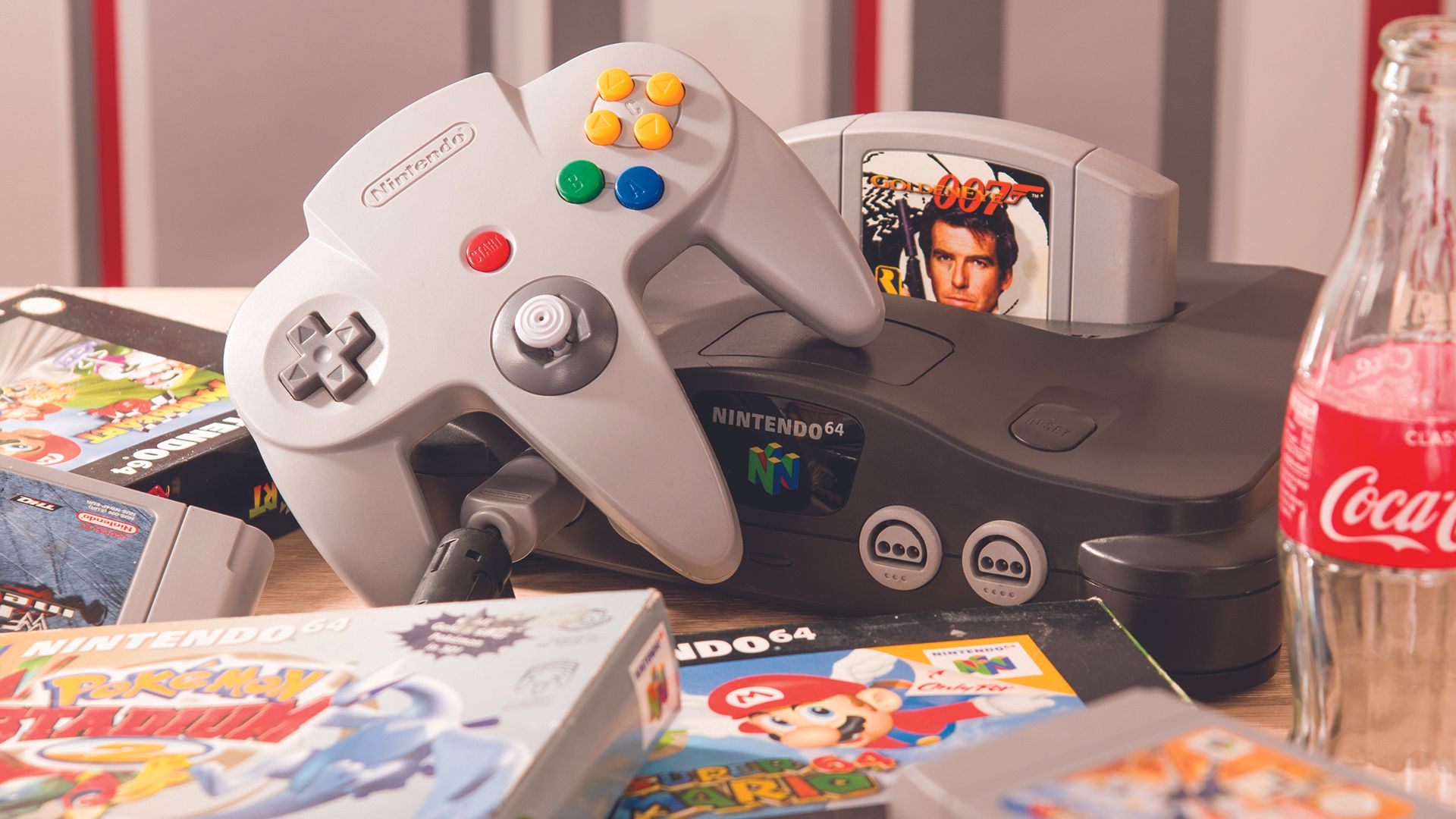
Many systems before the Nintendo 64 offered multiplayer experiences, but few captured the same energy. Nintendo built four controller ports directly into the hardware, encouraging developers to design games around group play from the very beginning. Nintendo 64 games that changed multiplayer forever succeeded because they created moments players still talk about decades later. Victory celebrations, last-second betrayals, and furious rematches became part of everyday gaming life during the console’s golden years.
GoldenEye 007 Redefined Competitive Shooters
Few multiplayer games influenced gaming culture as dramatically as GoldenEye 007. Released during a period when first-person shooters primarily belonged on personal computers, the game somehow translated the genre into a console experience that felt smooth, exciting, and wildly addictive. Split-screen matches quickly became legendary among Nintendo 64 owners.
The brilliance of GoldenEye came from how customizable multiplayer sessions felt. Players could alter weapons, game rules, character selections, and match conditions in ways that encouraged endless experimentation. One round might feature explosive rocket launcher chaos, while the next turned into tense battles using only proximity mines. That variety kept groups entertained for countless hours.
I still remember how intensely competitive those matches became. Friends memorized map layouts, developed favorite weapons, and created unofficial house rules that transformed sessions into miniature tournaments. The game also introduced many console players to multiplayer shooters for the first time, laying the foundation for franchises that later dominated online gaming. Without GoldenEye, console shooters may have evolved very differently.
Mario Kart 64 Perfected Multiplayer Chaos
Kart racing existed before Mario Kart 64, but the Nintendo 64 installment elevated the formula into something timeless. The transition into 3D environments expanded the sense of speed and unpredictability while preserving the accessible gameplay that made the series so popular.
No racing game caused more arguments among friends than Mario Kart 64. Blue shells destroyed friendships in seconds, and perfectly timed banana peels became sources of endless frustration and laughter. The game balanced skill and randomness brilliantly, allowing inexperienced players to remain competitive while rewarding experienced racers who mastered drifting and shortcuts.
Battle Mode also became an enormous part of the multiplayer experience. Driving around arenas while hunting friends with shells and traps felt entirely different from standard racing. Those competitive sessions often lasted longer than actual races because players constantly demanded rematches. Nintendo 64 games that changed multiplayer forever rarely captured social chaos better than Mario Kart 64.
Super Smash Bros. Introduced a New Kind of Fighting Game
Traditional fighting games often intimidated casual players with complicated move lists and technical mechanics. Super Smash Bros. completely changed that approach by turning combat into a fast-paced party experience accessible to nearly anyone holding a controller.
The concept sounded unusual at first. Nintendo characters battling each other on floating stages seemed almost absurd during the late 1990s. Yet the game’s simplicity immediately clicked with players because movement felt intuitive and matches remained unpredictable. Instead of memorizing endless button combinations, players focused on positioning, timing, and survival.
I watched entire rooms erupt during close Smash Bros. matches. A single well-timed attack could send opponents flying off-screen, instantly changing the outcome of a battle. The game became a perfect balance between casual fun and competitive depth. Decades later, the franchise still dominates tournaments and parties alike because the original Nintendo 64 version established such a strong foundation.
Mario Party Turned Friendships Into Rivalries
Few games captured the emotional extremes of multiplayer gaming like Mario Party. Joy, anger, celebration, and betrayal constantly shifted within a single match as players competed through board game mechanics mixed with frantic mini-games.
The genius of Mario Party came from its unpredictability. A player dominating for an hour could lose everything because of a random event or stolen star. Meanwhile, someone struggling badly might suddenly surge back into contention after a lucky turn. That constant uncertainty kept players emotionally invested from start to finish.
Mini-games became the true highlight of the experience. Quick competitions involving racing, survival challenges, and reaction-based gameplay created nonstop tension between turns. I still remember groups shouting at televisions during final-second victories or devastating losses. The game transformed multiplayer sessions into emotional roller coasters that players willingly returned to again and again.
Diddy Kong Racing Expanded Multiplayer Possibilities
Mario Kart 64 may have dominated racing discussions, but Diddy Kong Racing quietly introduced ideas that made multiplayer racing feel deeper and more adventurous. Rare blended kart racing with exploration, vehicle variety, and an ambitious adventure mode that stood apart from Nintendo’s formula.
The inclusion of airplanes and hovercrafts dramatically changed multiplayer strategy. Different vehicles handled uniquely depending on the terrain, forcing players to adapt constantly during races. Tracks also featured creative shortcuts and environmental hazards that rewarded experimentation and practice.
I always appreciated how Diddy Kong Racing balanced accessibility with complexity. Casual players could enjoy chaotic races immediately, while experienced competitors mastered advanced movement techniques and optimal routes. The game often lived in Mario Kart’s shadow, yet its multiplayer innovation deserves far more recognition within retro gaming history.
Perfect Dark Elevated Console Multiplayer
Rare followed the success of GoldenEye with Perfect Dark, a game that expanded nearly every aspect of multiplayer shooters on consoles. More weapons, smarter artificial intelligence, additional customization options, and futuristic gadgets turned multiplayer sessions into unforgettable experiences.
Bots became one of the game’s greatest innovations. Groups no longer needed four human players to enjoy intense matches because artificial opponents filled empty spaces effectively. Different bot personalities and difficulty levels added remarkable flexibility, especially for players practicing alone or competing in smaller groups.
Weapons also carried incredible creativity. Guns featured alternate firing modes that dramatically altered gameplay, encouraging experimentation during matches. I still think Perfect Dark represented one of the most ambitious multiplayer shooters of its era because it constantly rewarded curiosity and adaptation. The game proved console shooters could offer depth equal to many PC experiences.
NFL Blitz Made Sports Games Wildly Entertaining
Simulation sports games appealed to realism, but NFL Blitz embraced pure arcade insanity instead. The game stripped football down into exaggerated action filled with brutal tackles, impossible plays, and nonstop energy.
Matches moved quickly, making multiplayer sessions perfect for gatherings and parties. Late hits after the whistle, over-the-top animations, and simplified mechanics created an experience where almost anyone could jump in immediately. Traditional football knowledge helped, but chaos often mattered just as much as strategy.
I rarely saw quiet rooms during NFL Blitz matches. Players celebrated massive hits, shouted during interceptions, and constantly demanded rematches after close finishes. The game demonstrated that multiplayer sports titles did not need realism to become unforgettable. Sometimes exaggeration created far more excitement.
Wave Race 64 Introduced Physics-Based Competition
Water physics may sound mundane now, but Wave Race 64 felt revolutionary during the late 1990s. The game transformed jet ski racing into a technical multiplayer experience where waves and environmental conditions constantly affected movement.
Racing against friends became incredibly tense because mastering water behavior required precision and patience. Unlike simpler racing games, Wave Race forced players to adjust continuously to shifting conditions. Crashing into rough waves or mistiming jumps could instantly ruin a perfect race.
The game also looked stunning for its time. Dynamic water effects created an immersive atmosphere that impressed nearly everyone who played it. Multiplayer sessions became intensely competitive because races demanded both technical skill and adaptability. Wave Race 64 quietly introduced mechanics that influenced countless later racing games.
Bomberman 64 Created Explosive Multiplayer Sessions
Local multiplayer rarely became more chaotic than Bomberman 64. The formula appeared deceptively simple at first. Players navigated arenas while placing bombs designed to trap and eliminate opponents. Yet beneath that simplicity existed incredible strategic depth.
Positioning mattered constantly because explosions spread across predictable patterns that players learned to manipulate creatively. Matches often transformed into tense mind games where opponents attempted to corner each other while avoiding their own traps. Quick reflexes helped, but anticipation usually mattered even more.
I loved how unpredictable Bomberman sessions became. One careless mistake could eliminate even the strongest player instantly, which kept everyone engaged until the final moments. Multiplayer gaming thrived on tension and laughter during the Nintendo 64 era, and Bomberman captured both perfectly.
Star Fox 64 Delivered Cinematic Multiplayer Action
Most players remember Star Fox 64 for its incredible single-player campaign, but the multiplayer mode also became an underrated gem. Dogfights between Arwings created fast-paced aerial battles that felt cinematic and intense.
Split-screen combat required constant awareness because opponents attacked from every direction. Barrel rolls, sharp turns, and laser precision determined survival during chaotic aerial battles. The controls felt remarkably smooth, allowing players to perform advanced maneuvers after only a short time.
The game also benefited enormously from the Nintendo 64 Rumble Pak, which added physical feedback during explosions and combat. That feature made multiplayer sessions feel more immersive and exciting than many competitors at the time. Star Fox 64 demonstrated how presentation and gameplay could combine to create unforgettable social experiences.
Four Controller Ports Changed Everything
The Nintendo 64’s hardware design played a major role in multiplayer success. Earlier consoles often required adapters for larger groups, but Nintendo built four controller ports directly into the system. That decision encouraged developers to design games around shared local experiences immediately.
Friends no longer needed complicated setups to enjoy multiplayer sessions together. Four players could jump into games instantly, transforming living rooms into competitive arenas within minutes. That convenience helped multiplayer gaming become central to the Nintendo 64 identity rather than an optional feature.
I still think that hardware decision shaped an entire generation of gaming memories. Developers clearly embraced the opportunity because multiplayer modes appeared across countless genres. Racing games, shooters, sports titles, platformers, and party games all benefited from Nintendo’s emphasis on local social gaming.
Couch Multiplayer Created Stronger Memories
Modern online gaming offers convenience and global competition, but local multiplayer carried a unique emotional energy that online sessions rarely replicate. Sitting beside opponents created immediate reactions that intensified victories, defeats, and rivalries in unforgettable ways.
Arguments over cheating, accidental screen-looking, and lucky victories became part of the entertainment itself. Players celebrated loudly, teased each other constantly, and experienced games together in real time. Those shared reactions transformed multiplayer gaming into something deeply social rather than purely competitive.
Nintendo 64 games that changed multiplayer forever succeeded partly because they thrived in physical spaces filled with noise, excitement, and unpredictability. The console turned gaming into a group activity that felt personal and immediate. Decades later, those memories still remain vivid because players experienced them together instead of through headsets and internet connections.
Nintendo 64 Multiplayer Still Influences Gaming Today
Many modern multiplayer concepts trace their roots directly back to Nintendo 64 classics. Console shooters evolved dramatically because of GoldenEye and Perfect Dark. Party games owe enormous debts to Mario Party and Smash Bros. Even modern kart racers continue borrowing ideas refined during the Nintendo 64 era.
Game developers still reference these classics because the design principles remain effective. Accessible mechanics, fast pacing, unpredictable moments, and strong social interaction continue driving successful multiplayer games today. The technology may look outdated, but the core ideas remain timeless.
Revisiting Nintendo 64 multiplayer games always reminds me how creative developers became during the transition into 3D gaming. Studios experimented constantly because the possibilities still felt fresh and unexplored. That experimentation helped produce some of the most influential multiplayer experiences ever created.
Final Thoughts
The Nintendo 64 transformed multiplayer gaming into a cultural event rather than a simple feature tucked beside single-player campaigns. Friends gathered around televisions for marathon gaming sessions filled with competition, laughter, and unforgettable moments that still define retro gaming memories today.
GoldenEye 007, Mario Kart 64, Super Smash Bros., Mario Party, and countless other titles pushed multiplayer gaming into exciting new territory. Those games succeeded because they balanced accessibility with depth while encouraging genuine social interaction. Players did not simply compete against each other. They created stories together.
Nintendo 64 games that changed multiplayer forever continue earning praise because their influence never truly disappeared. Modern gaming evolved technologically, but the emotional energy those games created still feels unmatched. Long after the console generation ended, the memories formed around those multiplayer experiences continue living on through the people who shared them.