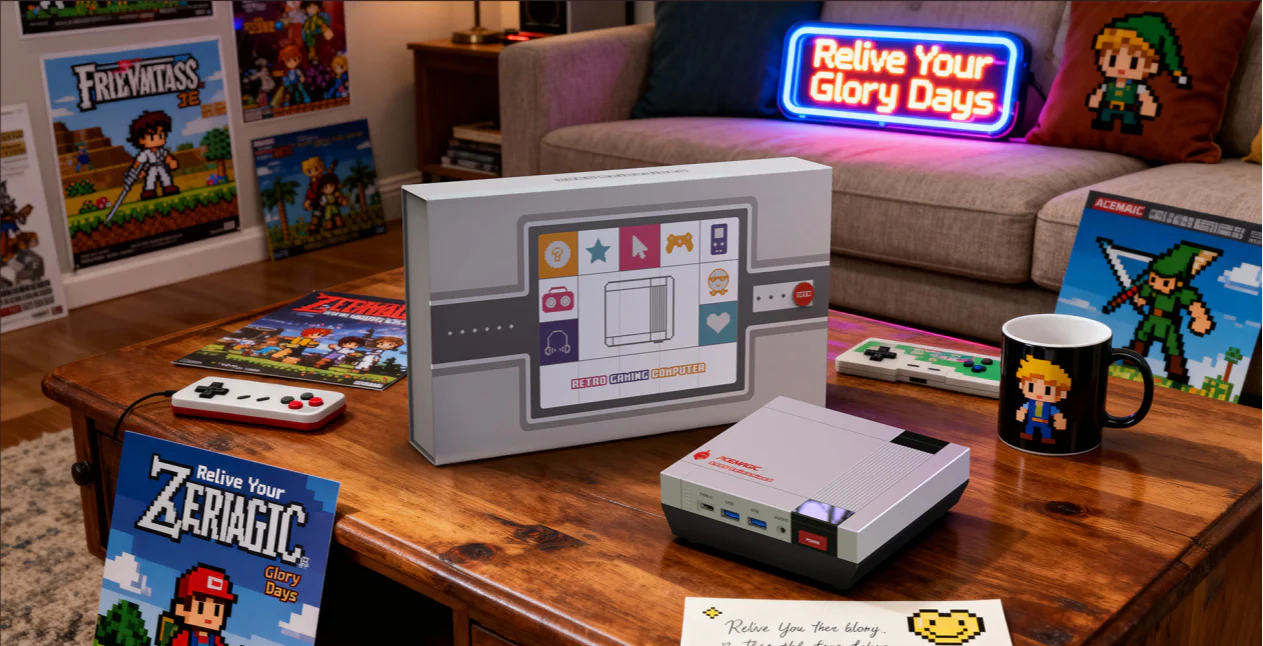
Retro gaming collections grow quietly at first. A single console turns into several, a handful of cartridges becomes an overflowing stack, and before long, shelves begin sagging beneath decades of gaming history. Boxed games pile onto desks, controllers disappear into drawers, and loose cartridges spread across entertainment centers until the room starts looking less like a gaming setup and more like an overcrowded storage unit.
Good shelving changes that feeling completely. A proper display transforms retro gaming from scattered clutter into something organized, personal, and visually impressive. After years spent rebuilding retro collections across cramped apartments, dedicated gaming rooms, and tiny office corners, I realized the best gaming shelves for retro collections do far more than hold games safely. They shape the atmosphere of the entire room while turning aging hardware into part of the room’s identity rather than a chaotic pile of nostalgia.
Strong Shelves Matter More Than Fancy Designs
Retro collections become surprisingly heavy once cartridges, boxed games, consoles, and CRT accessories begin accumulating together. Weak shelving may look appealing initially, but cheap materials eventually bend under the weight of larger collections.
Solid wood shelving consistently performs better long term because it handles heavy hardware without warping or sagging. Metal-supported shelves also provide excellent stability for collectors displaying bulky systems like the original Xbox, Sega Saturn, or large CRT monitors.
One cheap bookshelf in my old apartment collapsed beneath a growing stack of PlayStation and Super Nintendo games late one evening. Nothing valuable broke, thankfully, but the experience permanently changed how I viewed shelving quality. Since then, durability always comes before aesthetics whenever I upgrade retro gaming storage.
Adjustable Shelves Improve Flexibility
Retro gaming collections rarely stay static. Cartridge sizes vary dramatically between consoles, boxed games demand different spacing, and larger collector editions often refuse to fit neatly onto standard shelves.
Adjustable shelving systems solve this problem beautifully because they adapt alongside expanding collections. A shelf arrangement perfect for Sega Genesis cartridges today might require completely different spacing once PlayStation long boxes or Nintendo 64 collections enter the room later.
I underestimated adjustable shelves until reorganizing a mixed collection spanning several console generations. The ability to customize shelf heights prevented enormous amounts of wasted space while making the setup feel dramatically cleaner and easier to manage.
Cube Shelving Works Surprisingly Well
Cube shelving became incredibly popular among retro collectors for good reason. The design naturally accommodates cartridges, controllers, handheld consoles, and boxed games without requiring extensive customization.
Individual cubes also help organize collections by console generation or genre, which makes navigating larger libraries far easier during gaming sessions. Some collectors even dedicate entire cubes to favorite franchises or themed displays.
One of my favorite retro setups relied almost entirely on cube shelving because the structure balanced storage and presentation beautifully. The room stayed visually organized while still allowing quick access to consoles and games without constant rearranging.
Floating Shelves Create Cleaner Spaces
Traditional bookshelves dominate smaller rooms visually, especially once collections begin expanding aggressively. Floating shelves reduce that heaviness while giving retro setups a cleaner and more modern appearance.
Retro consoles displayed on floating shelves almost resemble museum pieces once arranged properly. Controllers, cartridges, and boxed games gain more visual presence because the shelving itself disappears subtly into the background.
I installed floating shelves above a CRT setup years ago mainly to save floor space. Unexpectedly, the room immediately felt larger and more stylish despite containing the same hardware as before. Smaller retro spaces benefit enormously from reducing visual clutter wherever possible.
Media Shelves Fit Retro Games Perfectly
Standard bookshelves often waste valuable space because retro game cases and cartridges rarely match ordinary book dimensions. Media shelves designed for DVDs, Blu-rays, or CDs frequently fit retro collections much more efficiently.
PlayStation games, Sega CD titles, Dreamcast cases, and even older cartridge boxes often display beautifully on narrower media shelving. The reduced depth also keeps collections from disappearing into oversized shelves awkwardly.
One narrow media shelf completely transformed how my PlayStation and Sega Saturn collections looked. Suddenly the games displayed neatly instead of sinking backward into oversized furniture built for completely different storage needs.
Open Shelving Encourages More Gaming
Retro collections hidden inside cabinets often become easier to ignore over time. Open shelving keeps consoles and games visible constantly, which naturally encourages more spontaneous gaming sessions.
Seeing cartridges lined across shelves or controllers hanging beside favorite consoles creates a sense of invitation difficult to replicate with closed storage systems. Retro gaming thrives on atmosphere and nostalgia, and open displays strengthen both significantly.
I noticed this immediately after reorganizing my setup from closed cabinets into open shelving. Consoles I had barely touched for months suddenly returned to regular rotation simply because they remained visible and accessible throughout the room.
Closed Cabinets Protect Valuable Collections
Open shelving looks fantastic, but some collections require additional protection from dust, sunlight, and humidity. Closed cabinets help preserve valuable boxed games and rare accessories much more effectively long term.
Glass-door cabinets offer an excellent compromise because they protect collections while still allowing visual display. Dust accumulation also drops dramatically compared to fully open shelving setups.
One particularly dusty apartment forced me toward glass-door storage after constant cleaning became exhausting. The difference surprised me immediately. Rare boxed games stayed cleaner, shelves required less maintenance, and the collection still remained visually impressive from across the room.
Corner Shelves Maximize Smaller Rooms
Small retro gaming spaces demand creative furniture solutions. Corner shelving utilizes awkward room areas that otherwise remain wasted while freeing central floor space for seating and consoles.
Compact corner shelves work especially well for handheld collections, controllers, and cartridge displays. Some even fit smaller CRT televisions surprisingly comfortably while preserving room movement and overall balance.
One tiny apartment forced me into building a retro setup almost entirely around corner shelving due to limited space. That arrangement eventually became one of my favorite setups because it felt cozy, efficient, and visually balanced despite the room’s small size.
Wire Management Changes The Entire Look
Retro setups produce enormous amounts of cables. Power cords, controller wires, HDMI adapters, and AV connections quickly turn even beautiful shelving into visual chaos without proper organization.
Shelves with cable routing holes, rear openings, or hidden management channels dramatically improve setup cleanliness. Organized cables also simplify console swapping and maintenance significantly over time.
Nothing ruined my early retro setups faster than tangled cables spilling behind shelves and across the floor constantly. Once better wire management entered the picture, the room instantly looked more polished and far easier to maintain daily.
Industrial Shelves Add Character
Industrial-style shelving blends metal frames with wood surfaces in ways that complement retro gaming surprisingly well. Older consoles and cartridges often pair beautifully with industrial furniture because both carry strong nostalgic character.
These shelves also tend to support heavier weight loads comfortably, which becomes important once larger CRT televisions and multiple consoles enter the setup. Durability matters enormously for long-term retro storage.
One industrial shelving unit became the centerpiece of my gaming room almost accidentally after I bought it mainly for practical reasons. The combination of dark metal and wood immediately gave the room more personality while supporting heavier hardware effortlessly.
Lighting Makes Shelves Feel Alive
Shelving alone rarely creates memorable retro gaming spaces. Lighting transforms ordinary displays into immersive setups that feel warm, nostalgic, and visually dramatic during evening gaming sessions.
LED strips, soft shelf lighting, and small accent lamps help highlight consoles and cartridge artwork beautifully without overwhelming the room. Warm lighting especially pairs wonderfully with CRT glow and retro aesthetics.
Several friends completely changed their opinion of my gaming room after I added subtle shelf lighting throughout the setup. Suddenly the collection felt curated instead of simply stored. Atmosphere matters deeply in retro gaming because nostalgia connects strongly to visual mood.
Vertical Storage Prevents Clutter
Floor space disappears quickly once retro collections expand beyond a handful of systems. Vertical shelving solves this problem by maximizing wall space without crowding the room itself.
Tall shelves help smaller gaming spaces feel organized while allowing collections to grow upward instead of outward. Cartridge-based collections especially benefit because retro games display beautifully in vertical arrangements.
One narrow vertical shelf ended up holding nearly my entire Game Boy and Game Boy Advance collection while consuming barely any floor space at all. Efficient storage like that becomes invaluable once retro collections begin growing aggressively.
Custom Shelves Add Personality
Mass-produced shelving works perfectly fine for many setups, but custom shelves allow collectors to tailor storage specifically around their favorite consoles and display styles.
Custom shelves also solve awkward sizing issues common with retro hardware. Large boxed consoles, arcade sticks, and oversized collector editions often fit poorly onto standard furniture dimensions.
I visited a retro collector years ago whose entire setup revolved around custom-built wooden shelves designed specifically for cartridge displays and CRT televisions. The room felt deeply personal in a way mass-produced furniture rarely achieves. Custom storage reflects passion just as much as the collection itself.
Rotating Displays Prevent Overcrowding
Many retro collectors eventually run out of display space entirely. Attempting to show everything simultaneously often makes shelves feel cluttered and visually exhausting instead of impressive.
Rotating displayed consoles and games seasonally keeps setups fresh while preventing overcrowding. Collections remain manageable, and favorite systems receive proper attention instead of disappearing into packed shelves.
I resisted rotating displays initially because I wanted everything visible at once. Eventually the room became too visually noisy to enjoy comfortably. Once I started rotating consoles and themed displays periodically, the setup immediately felt cleaner and more intentional.
Shelves Become Part Of The Retro Experience
Retro gaming shelves eventually stop functioning as simple furniture. They become part of the experience itself. Certain consoles displayed beside favorite cartridges trigger memories instantly before gameplay even begins.
A shelf lined with Super Nintendo cartridges, old strategy guides, and worn controllers carries emotional weight that digital libraries simply cannot replicate. Retro collections tell personal stories through physical objects arranged across the room.
Some nights I spend nearly as much time looking through shelves and reorganizing displays as actually playing games. That process feels strangely relaxing because retro gaming involves preservation, nostalgia, and personal history just as much as gameplay itself.
Final Thoughts
Retro gaming collections deserve storage that protects hardware while showcasing the personality and history behind every console, cartridge, and controller. Poor shelving eventually creates clutter, frustration, and unnecessary wear on collections that often took years to build carefully.
The best gaming shelves for retro collections combine strength, flexibility, organization, and visual presentation into setups that feel inviting rather than overwhelming. Adjustable shelves, floating designs, industrial furniture, media racks, and vertical storage all offer different advantages depending on room size and collection style.
A great retro gaming room does more than store old hardware. It creates atmosphere. Shelves lined with cartridges, softly glowing consoles, and carefully arranged memorabilia transform ordinary rooms into spaces filled with memory and personality. Long after the consoles power down for the night, the shelves themselves continue telling the story of decades spent chasing classic games and preserving pieces of gaming history that still refuse to fade away.