Cartridges stacked beside chunky gray controllers once represented the future of gaming in a way that felt impossible to ignore. The Nintendo 64 arrived during a period when the industry was shifting aggressively toward 3D graphics, and suddenly entire worlds felt larger, stranger, and more immersive than anything many players had experienced before. Sleepovers turned into multiplayer marathons, rumors spread across school hallways about hidden secrets, and late nights disappeared while chasing stars, battling friends, or exploring massive fantasy worlds.
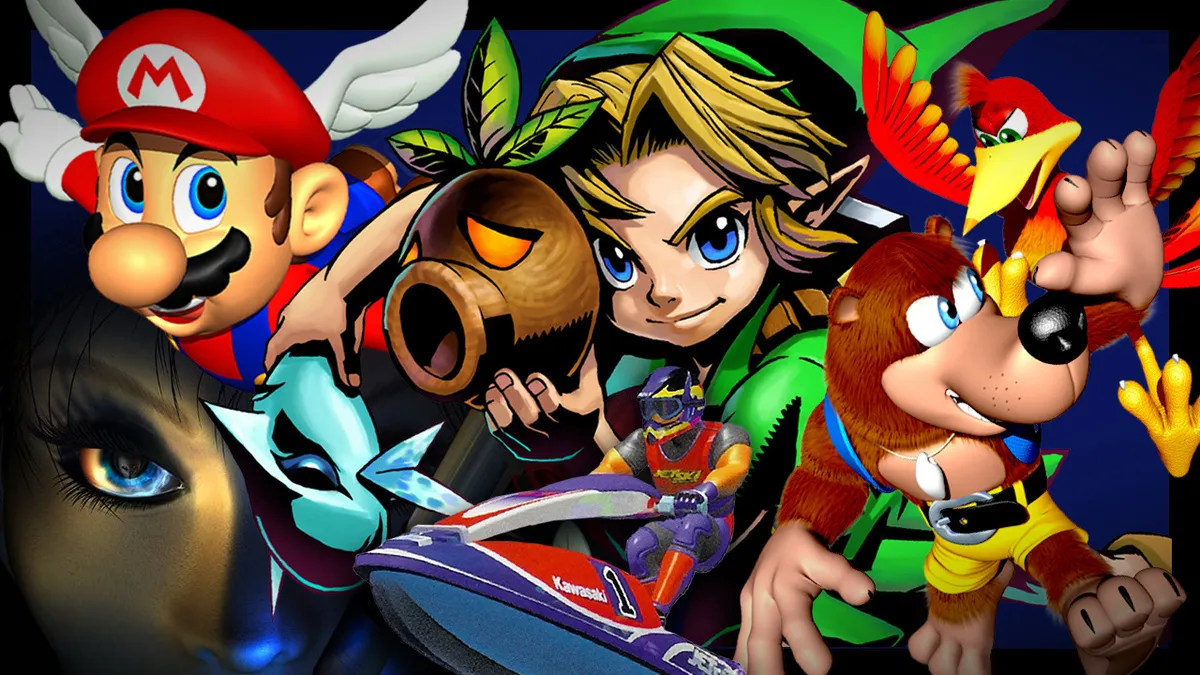
The console’s library was not as enormous as some competing systems from the era, yet the quality of its best releases remains extraordinary decades later. Many titles introduced gameplay ideas that still influence modern developers today. The greatest Nintendo 64 games ever released continue holding legendary status because they combined innovation, personality, and unforgettable multiplayer experiences in ways few consoles have matched since.
Super Mario 64 Revolutionized 3D Gaming
Super Mario 64 changed the gaming industry permanently by proving 3D platforming could feel intuitive, fluid, and exciting. Mario’s movement alone felt groundbreaking because players suddenly had complete freedom to run, dive, wall-kick, swim, and explore expansive environments from multiple angles.
The castle hub world remains one of the smartest design decisions Nintendo ever made. Hidden paintings, secret stars, and mysterious locked doors constantly encouraged curiosity. I still remember spending hours exploring areas unrelated to the main objectives simply because movement itself felt so satisfying.
Its influence reaches far beyond Nintendo history. Camera control systems, open-level design, and analog movement mechanics all became foundational elements for future 3D games. Super Mario 64 did not just succeed commercially; it rewrote the rules of game design entirely.
The Legend of Zelda: Ocarina of Time Defined Adventure Gaming
The Legend of Zelda: Ocarina of Time became one of the most respected games ever made because it balanced exploration, storytelling, puzzles, and combat with remarkable precision. Hyrule felt enormous during the late 1990s, especially for players accustomed to smaller game worlds.
Lock-on targeting transformed combat dramatically. Battles against enemies suddenly felt cinematic and strategic rather than chaotic, which helped establish standards many modern action games still follow today.
The emotional atmosphere also played a major role in the game’s legacy. Wandering through Hyrule Field at sunset while hearing the soundtrack shift subtly created moments that felt strangely personal. I still believe the game captured a sense of adventure few titles have matched since.
GoldenEye 007 Made Multiplayer Legendary
GoldenEye 007 turned living rooms into battlegrounds through chaotic split-screen multiplayer sessions that became unforgettable social experiences. Long before online gaming dominated the industry, GoldenEye created local multiplayer rivalries that lasted for years.
The weapon variety and customizable match settings kept gameplay constantly entertaining. Proximity mines, one-shot kills, and bizarre house rules transformed casual matches into loud competitions filled with accusations of screen peeking and unfair tactics.
Its single-player campaign also deserves enormous credit. Mission objectives, stealth mechanics, and cinematic presentation made the game feel far more ambitious than most console shooters at the time. GoldenEye helped prove first-person shooters could thrive outside the PC market.
Mario Kart 64 Perfected Competitive Chaos
Mario Kart 64 mastered the balance between skill and unpredictability better than almost any multiplayer game of its era. Experienced players could dominate through drifting techniques and track knowledge, yet one blue shell could destroy victory instantly.
Battle Mode became just as important as traditional racing. Friends hunted each other through arenas while protecting balloons desperately, creating hilarious moments of panic and revenge.
Its accessibility remains one of its greatest strengths. New players understand the controls quickly, while experienced competitors still find room for mastery. That balance helped Mario Kart 64 become a permanent game night classic.
Banjo-Kazooie Delivered Pure Personality
Banjo-Kazooie brought humor, creativity, and exploration together in one of the Nintendo 64’s most charming adventures. Rare filled the world with strange characters, absurd dialogue, and memorable locations that constantly rewarded curiosity.
The partnership between Banjo and Kazooie also gave movement incredible variety. Flying, swimming, climbing, and special abilities made exploration feel dynamic throughout the adventure.
I always admired how alive the worlds felt despite technical limitations. Treasure hidden behind puzzles, quirky NPC interactions, and playful environmental details made exploration consistently rewarding.
Star Fox 64 Perfected Arcade Action
Star Fox 64 delivered nonstop action while maintaining cinematic pacing and memorable character interactions. Fast missions, branching routes, and intense dogfights kept adrenaline high from beginning to end.
Voice acting added enormous personality to the experience. Hearing teammates warn players about incoming attacks or celebrate victories helped missions feel energetic and immersive.
Its replay value also remained exceptional because alternate routes and hidden objectives encouraged experimentation constantly. I still enjoy replaying levels simply to chase better scores and unlock secret pathways.
Perfect Dark Expanded Everything GoldenEye Started
Perfect Dark built upon GoldenEye’s success while adding deeper mechanics, smarter AI, and more ambitious multiplayer features. Futuristic weapons and gadgets gave combat greater variety and tactical possibilities.
The game’s atmosphere felt darker and more mature than many Nintendo 64 releases. Corporate conspiracies, alien threats, and cyberpunk influences created a distinct identity that separated it from other shooters.
Multiplayer customization became almost endless for its era. Bots, weapon settings, and scenario variations allowed players to tailor matches endlessly, which gave Perfect Dark enormous longevity during multiplayer sessions.
Super Smash Bros. Created a New Multiplayer Phenomenon
Super Smash Bros. introduced a completely different style of fighting game focused on chaotic fun rather than strict technical mastery. Nintendo characters battling each other instantly felt exciting because the crossover concept alone seemed unbelievable at the time.
Items and stage hazards added unpredictability constantly. Poké Balls, hammers, and moving environments transformed matches into frantic spectacles where anything could happen suddenly.
I remember how quickly local tournaments formed whenever the game appeared at gatherings. Rivalries developed immediately because Smash Bros. balanced accessibility and competitive depth remarkably well from the beginning.
Paper Mario Reinvented the RPG Formula
Paper Mario gave the Mario universe surprising emotional warmth while simplifying RPG mechanics without sacrificing depth. Its paper-inspired art style still feels visually unique decades later.
Turn-based combat stays engaging because timed attacks and defensive inputs require active participation constantly. Battles never feel passive or repetitive for long stretches.
The writing also deserves recognition for its humor and charm. Characters display personality consistently, and dialogue often feels genuinely funny rather than forced. Paper Mario proved RPGs could remain approachable while still delivering meaningful adventures.
Wave Race 64 Showed Off Physics and Atmosphere
Wave Race 64 stunned players through realistic water physics that felt revolutionary during the Nintendo 64 era. Waves constantly shift and react dynamically, making races feel unpredictable and physically demanding.
Weather effects strengthened immersion significantly. Stormy conditions transform courses dramatically, forcing players to adapt strategies mid-race while struggling against rough water conditions.
Its controls remain surprisingly satisfying even today. Jet ski handling feels responsive yet challenging enough to reward practice and precision over time.
Pokémon Stadium Turned Childhood Battles Into Spectacle
Pokémon Stadium brought Pokémon battles into full 3D presentation for the first time, which felt magical for fans who grew up with Game Boy sprites. Watching familiar creatures battle with animated attacks created enormous excitement.
The transfer pak functionality also felt groundbreaking. Bringing personal Pokémon teams from handheld games into console battles created a stronger sense of ownership and connection.
Mini-games added another layer of multiplayer entertainment. Simple competitions became surprisingly addictive during gatherings because they balanced skill and chaos perfectly.
The Greatest Nintendo 64 Games Ever Released Changed Multiplayer Culture
Few consoles embraced local multiplayer as successfully as the Nintendo 64. Four controller ports built directly into the system encouraged social gaming experiences that defined an entire generation of players.
Split-screen battles, racing tournaments, and cooperative adventures became central parts of friendships and family gatherings. Modern online gaming offers convenience, but local multiplayer created emotional energy difficult to replicate digitally.
I still believe much of the console’s legacy comes from those social memories. Trash talk, crowded couches, and shared victories made Nintendo 64 gaming feel intensely personal and communal.
Rare Helped Define the Console’s Identity
Developer Rare played an enormous role in shaping the Nintendo 64 library. Their games combined technical ambition, humor, creativity, and strong multiplayer design in ways that consistently pushed the console forward.
Titles like Banjo-Kazooie, GoldenEye, Perfect Dark, and Diddy Kong Racing demonstrated extraordinary variety despite sharing similar polish and personality. Rare understood how to make worlds feel alive through memorable characters and detailed environments.
The studio’s influence still feels visible throughout modern gaming. Many developers continue drawing inspiration from Rare’s level design philosophy and multiplayer innovations decades later.
Why Nintendo 64 Games Still Feel Special
The Nintendo 64 era represented a fascinating transition period where developers experimented aggressively with 3D design. Some ideas aged poorly, but the console’s best games still feel remarkably creative and influential.
Technical limitations sometimes strengthened imagination rather than restricting it. Foggy environments, stylized graphics, and exaggerated animations gave many games unique personality instead of chasing realism unsuccessfully.
The greatest Nintendo 64 games ever released also prioritized gameplay experimentation heavily. Developers seemed willing to take risks because the industry itself still felt unpredictable and rapidly evolving.
Nostalgia Alone Cannot Explain the Legacy
Nostalgia certainly influences retro gaming conversations, but nostalgia alone does not sustain decades of admiration. The Nintendo 64’s strongest titles remain genuinely enjoyable because their mechanics, creativity, and pacing still work exceptionally well today.
Modern players continue discovering classics like Ocarina of Time and Super Mario 64 because strong design principles remain timeless. Exploration, movement, multiplayer chaos, and memorable storytelling still connect with new audiences.
I often revisit Nintendo 64 games because they capture a specific sense of experimentation and wonder that feels increasingly rare. The industry was evolving rapidly, and developers seemed excited to discover what 3D gaming could become.
Final Thoughts
The Nintendo 64 delivered one of gaming’s most influential libraries during a period when the entire industry was reinventing itself around 3D technology. Developers experimented boldly with movement, multiplayer design, storytelling, and world-building in ways that permanently changed gaming history.
The greatest Nintendo 64 games ever released continue earning respect because they shaped genres rather than simply following trends. Mario explored new dimensions, Zelda transformed adventure design, GoldenEye revolutionized console shooters, and countless other classics pushed gaming into entirely new territory.
Long after cartridge slots stopped clicking and CRT televisions disappeared from living rooms, the Nintendo 64 remains unforgettable because its best games captured imagination on a massive scale. Those adventures, rivalries, and late-night multiplayer sessions still represent some of gaming’s most cherished memories for an entire generation.