Saturday mornings once revolved around cartridges stacked beside chunky television sets, tangled controller cords stretched across the floor, and the glow of 16-bit worlds pulling players into adventures that felt impossibly huge at the time. The Super Nintendo Entertainment System arrived during an era when developers were refining game design into an art form. Hardware limitations forced creativity, and the result was a library filled with titles that still feel remarkably polished decades later.
Many retro consoles rely heavily on nostalgia to remain relevant, but the SNES continues attracting new players because its best games still deliver genuinely great experiences. Tight gameplay, unforgettable music, expressive pixel art, and carefully balanced difficulty helped the system age better than many later consoles. SNES games every retro gamer needs to play are not simply historical curiosities anymore. They remain some of the finest examples of game design ever created.
Super Mario World Defined Platforming Excellence
Super Mario World remains one of the smoothest and most satisfying platformers ever made. Movement feels precise in a way that modern games still struggle to replicate, and the controls respond instantly whether Mario is sprinting across open fields or carefully balancing over dangerous pits. I still find myself replaying early stages just because controlling Mario feels naturally enjoyable.
The game constantly rewards curiosity without overwhelming players. Hidden exits, secret paths, and alternate routes transform the world map into a giant puzzle waiting to be explored. Discovering Star Road entrances or unlocking secret levels gave the adventure enormous replay value, especially during an era when internet guides were not available to reveal everything immediately.
Visual design also deserves recognition for why the game still holds up. Bright colors, expressive animations, and memorable enemy designs make the Mushroom Kingdom feel alive without needing realistic graphics. The soundtrack pushes that atmosphere even further, turning simple levels into unforgettable experiences through energetic melodies that still live inside my head decades later.
The Legend of Zelda: A Link to the Past Perfected Adventure Gaming
The Legend of Zelda: A Link to the Past established a formula that countless games still borrow from today. Exploring Hyrule while uncovering hidden caves, solving dungeon puzzles, and collecting powerful equipment created a sense of adventure that felt massive on the SNES hardware.
The dual-world mechanic remains one of the smartest ideas Nintendo ever introduced. Switching between the Light World and Dark World transformed exploration into an interconnected puzzle where changes in one realm affected progress in another. I remember spending hours experimenting with items and searching for hidden entrances because the game constantly encouraged exploration.
Combat and dungeon design also aged remarkably well. Boss fights demand observation and timing rather than random button mashing, while puzzles remain clever without becoming frustrating. Many modern action-adventure games still follow the structure established by A Link to the Past because the formula works so effectively.
Chrono Trigger Made Time Travel Feel Magical
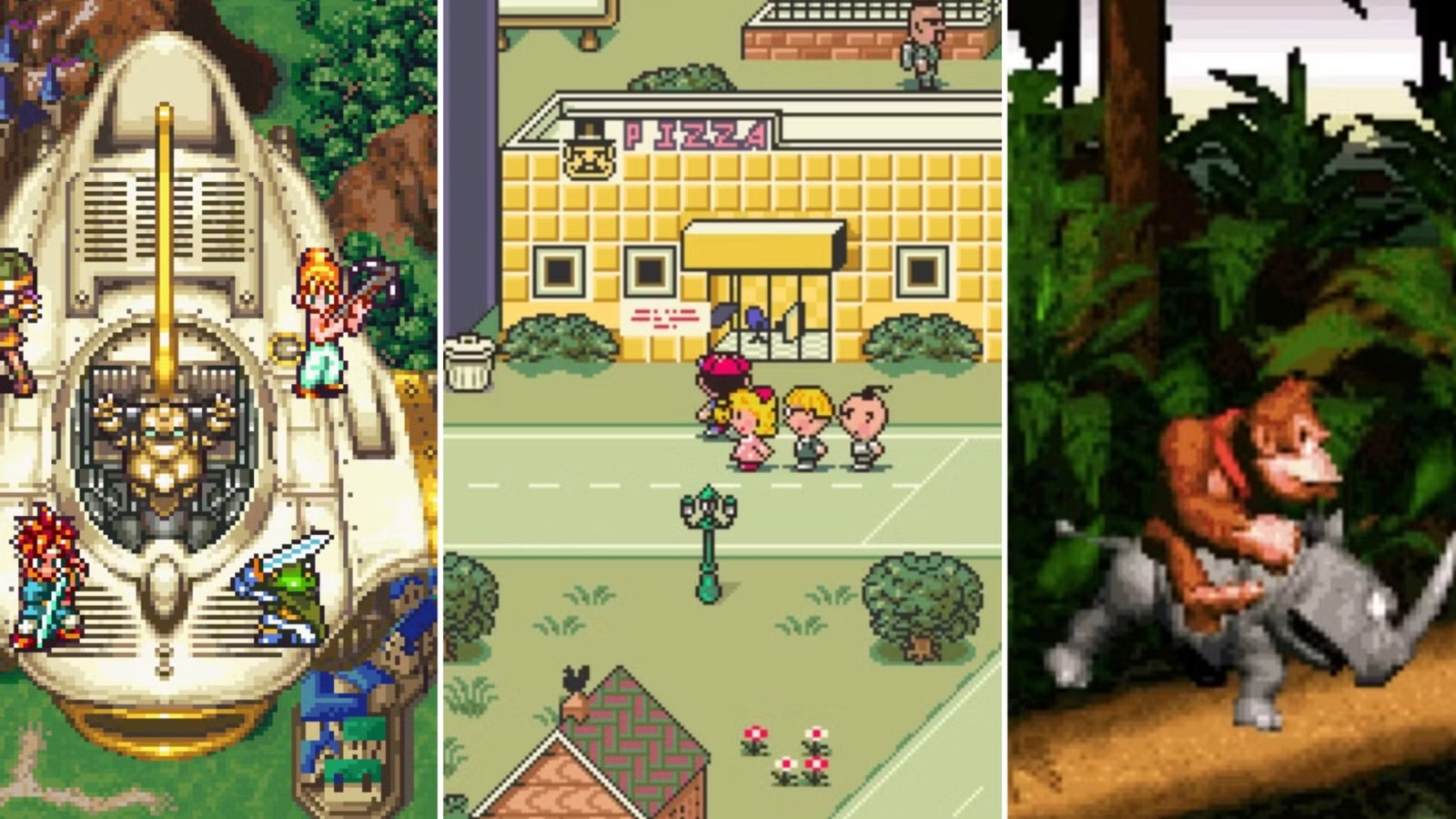
Chrono Trigger delivered one of the most memorable RPG experiences ever created. The pacing remains exceptional because the story moves quickly while still giving characters emotional depth and personality. Few games balance humor, drama, and adventure as naturally as Chrono Trigger.
Its combat system still feels fresh because battles happen seamlessly without separate transition screens. Combined attacks between party members added strategic variety that rewarded experimentation instead of repetitive grinding. I always appreciated how the game respected players’ time by avoiding unnecessary filler.
The soundtrack elevated the experience even further. Peaceful village themes, emotional story moments, and energetic battle music combined into one of the strongest soundtracks on the console. Even players unfamiliar with retro gaming often recognize how beautifully the game’s atmosphere still holds together.
Super Metroid Created Isolation and Discovery
Super Metroid built tension through silence, exploration, and environmental storytelling instead of lengthy dialogue. Landing alone on the planet Zebes immediately creates an uneasy feeling that stays throughout the adventure. The game trusts players to navigate its world independently, which makes discoveries feel deeply personal.
Progression feels incredibly satisfying because new abilities constantly expand exploration possibilities. Unlocking the Grapple Beam or Speed Booster transforms previously inaccessible areas into exciting opportunities for discovery. Backtracking never feels tedious because the world design connects naturally and rewards observation.
Atmosphere remains the game’s greatest strength. Sparse music, haunting environments, and subtle visual storytelling create emotional immersion that many modern games fail to achieve despite vastly superior hardware. Super Metroid proves that restraint often creates stronger impact than nonstop spectacle.
Donkey Kong Country Pushed the SNES Hardware to Its Limits
Donkey Kong Country looked almost unbelievable during its original release. Pre-rendered graphics gave the game a visual style that separated it instantly from competitors, but the gameplay is the real reason it still matters today.
Platforming feels responsive and rewarding, especially once players master the momentum of Donkey Kong and Diddy Kong. Levels introduce creative mechanics constantly, preventing repetition across the adventure. Mine cart sequences, underwater stages, and barrel-blasting challenges still create exciting moments even after multiple playthroughs.
The soundtrack deserves enormous praise for helping the game age gracefully. Tracks like aquatic themes and jungle melodies create atmosphere that remains unforgettable decades later. Few retro games combine visuals, music, and gameplay as cohesively as Donkey Kong Country.
EarthBound Turned Ordinary Life Into an RPG Adventure
EarthBound felt unlike anything else on the SNES. Instead of fantasy kingdoms and medieval warriors, the game embraced suburban neighborhoods, strange humor, and bizarre enemies that ranged from evil hippies to possessed household objects.
Its writing remains surprisingly modern because of its quirky dialogue and emotional sincerity. Conversations often feel humorous and strange, yet the story slowly develops deeper emotional themes beneath the comedy. I always admired how the game balanced absurdity with genuine heart.
Gameplay also avoids many frustrating RPG traditions. Automatic victories against weak enemies reduce unnecessary grinding, while inventory systems and combat mechanics remain accessible without sacrificing depth. EarthBound continues gaining new fans because its personality feels timeless.
Mega Man X Reinvented a Classic Formula
Mega Man X modernized the Mega Man series brilliantly by adding faster movement, wall climbing, and hidden upgrades. Those additions transformed gameplay into something more aggressive and fluid compared to earlier entries.
Level design rewards both precision and exploration. Hidden armor pieces and heart tanks encourage players to revisit stages while experimenting with different abilities. I still enjoy the satisfaction of discovering shortcuts or exploiting enemy weaknesses through carefully selected weapons.
The soundtrack remains legendary among retro gamers for good reason. Electric guitar-inspired melodies inject enormous energy into boss fights and platforming sections alike. Combined with responsive gameplay, the music helps create nonstop momentum throughout the adventure.
Final Fantasy VI Delivered Emotional Storytelling
Final Fantasy VI pushed storytelling further than most players expected from 16-bit hardware. Its large cast of characters all receive meaningful moments, which gives the world emotional depth beyond traditional fantasy adventures.
The villain Kefka remains unforgettable because of his unpredictability and cruelty. Watching the story shift dramatically midway through the game created genuine shock that still feels effective today. Few RPGs from that era dared to take narrative risks on that scale.
Combat and customization also remain enjoyable decades later. Espers allow flexible character development while turn-based battles maintain strong pacing throughout the adventure. Combined with one of the greatest soundtracks ever composed for a video game, Final Fantasy VI still feels remarkably ambitious.
F-Zero Delivered Speed Few Games Could Match
F-Zero showcased the SNES hardware immediately through its impressive sense of speed. Racing futuristic hovercraft across twisting tracks felt exhilarating, especially during an era when smooth motion was far from guaranteed in console gaming.
The difficulty curve kept races intense without feeling unfair. Mastering sharp turns and managing boost energy required concentration and practice, which made victories genuinely satisfying. I remember how quickly frustration turned into obsession after narrowly losing difficult races.
Its futuristic presentation also helped the game stand out. Bright visuals, energetic music, and fast-paced gameplay combined into an experience that still feels exciting today despite its relatively simple mechanics.
Street Fighter II Became a Cultural Phenomenon
Street Fighter II transformed fighting games forever. Arcades were already packed with competitive players, but the SNES version brought that same energy into living rooms around the world. Friendships and rivalries formed around mastering special moves and memorizing combos.
The roster remains iconic because each fighter feels distinct. Ryu, Chun-Li, Guile, Blanka, and Dhalsim all require different strategies, which gives the game endless replay value. Matches remain engaging because skill matters far more than luck.
Controls still feel responsive decades later. Timing attacks, countering opponents, and landing special moves create satisfying feedback that modern fighting games continue building upon. Street Fighter II proved competitive gaming could thrive long before online multiplayer existed.
Kirby Super Star Packed Multiple Games Into One Cartridge
Kirby Super Star delivered enormous value through its collection of different gameplay modes. Instead of relying on one long campaign, the game offered several adventures with unique mechanics and pacing.
Kirby’s copy abilities made experimentation consistently entertaining. Swallowing enemies and stealing their powers transformed combat into playful chaos where creativity mattered as much as reflexes. Cooperative multiplayer added another layer of fun because a second player could control Kirby’s helper companion.
The game’s lighthearted style helped it age beautifully. Colorful visuals, smooth animations, and cheerful music still feel charming without appearing outdated. Kirby Super Star remains one of the easiest SNES games for new retro players to enjoy immediately.
Why SNES Games Continue Feeling Timeless
The SNES era benefited enormously from balance between technical capability and creative restraint. Developers had enough hardware power to build detailed worlds and memorable soundtracks, but limitations still forced strong gameplay design to remain the priority.
Pixel art also aged more gracefully than early 3D graphics from later generations. Handcrafted sprites and vibrant environments still look visually appealing because they embrace stylization rather than chasing realism. Many modern indie games intentionally imitate SNES aesthetics because that visual style remains effective.
Another important reason these games endure is pacing. Most SNES titles respected players’ time by introducing mechanics quickly and maintaining steady momentum. Tutorials rarely interrupted gameplay, which allowed immersion to happen naturally through experimentation and exploration.
SNES Games Every Retro Gamer Needs to Play Still Influence Modern Design
Modern developers continue borrowing ideas from SNES classics because those foundations remain strong decades later. Exploration systems from Super Metroid shaped entire genres, while Chrono Trigger influenced RPG pacing and storytelling for generations.
Indie games especially reveal how powerful SNES-era design philosophy still is today. Developers regularly embrace pixel art, tight controls, atmospheric music, and focused gameplay because players continue responding positively to those elements. The influence of the Super Nintendo never truly disappeared.
Returning to these classics often reminds me how carefully crafted they were. Developers could not rely on massive budgets, realistic graphics, or online features to hold attention. They succeeded through memorable mechanics, rewarding progression, and gameplay loops polished to near perfection.
Final Thoughts
The Super Nintendo Entertainment System earned its legendary reputation through consistency. Few consoles produced such a deep library of games that remain genuinely enjoyable decades after release. Platformers, RPGs, racing games, fighting titles, and action adventures all flourished during the SNES era because developers constantly pushed creative boundaries.
Revisiting these classics proves that great game design survives technological change. Sharp visuals and advanced hardware can impress temporarily, but memorable gameplay creates experiences players return to for years. The strongest SNES titles still feel rewarding because their foundations remain timeless.
SNES games every retro gamer needs to play continue inspiring players and developers alike because they captured something difficult to replicate. They balanced challenge, creativity, atmosphere, and replayability in ways that still feel fresh today. Long after cartridges stopped lining store shelves, those adventures remain essential pieces of gaming history that deserve to be played, revisited, and celebrated.